


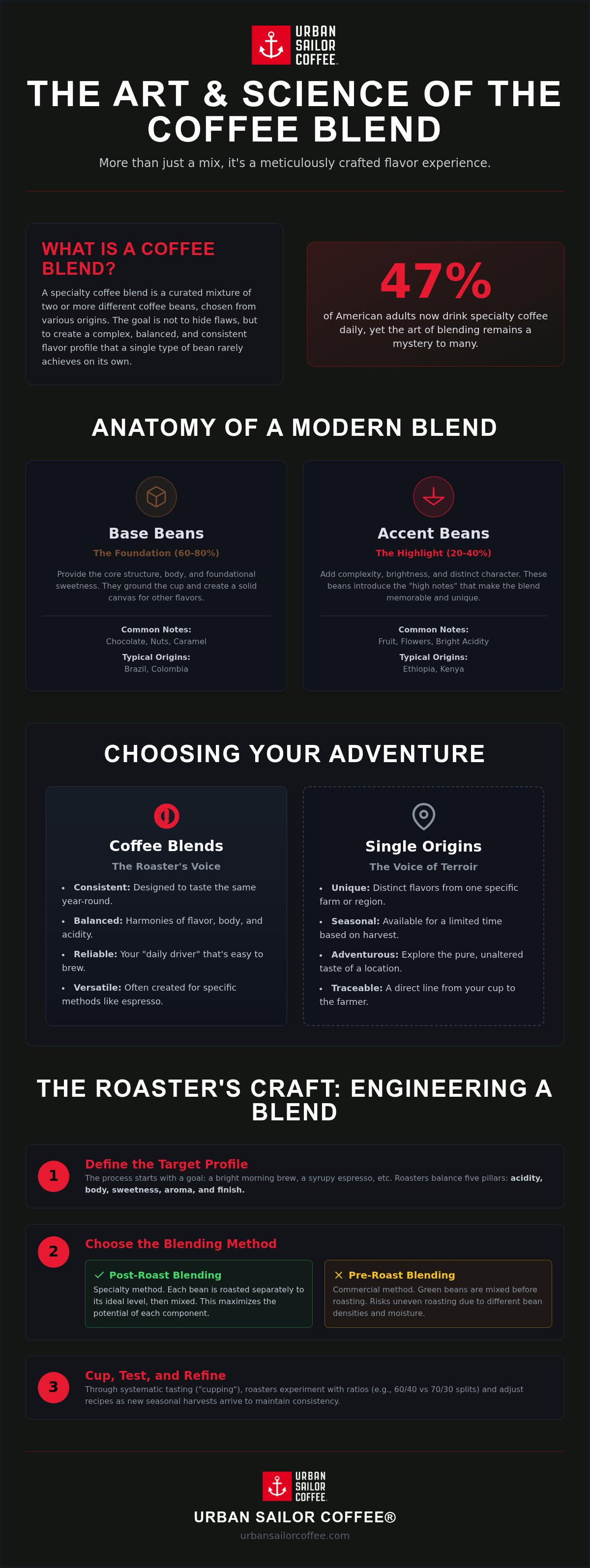
If you think a coffee blend is just a way for roasters to hide low-quality beans, you're missing out on the most intentional craft in the specialty world. While 47% of American adults now drink specialty coffee daily, many still wonder exactly what is a coffee blend and why it matters. It isn't a bag of leftovers. It's a flavor movie. Roasters act as directors, casting different beans for their unique roles to create a balanced, reliable profile that nature rarely produces in a single harvest. It's about taking the best traits from different regions to build something bigger than the sum of its parts.
We understand the frustration of inconsistent morning brews or feeling lost in a sea of confusing labels. You want a coffee that tastes as bold and reliable as your favorite mountain trail, yet the jargon often gets in the way. This guide will demystify the blending process and show you how to identify a premium roast like our Jordbaer Blend. You'll learn the practical differences between blends and single origins so you can choose your next subscription with total confidence. We are diving into the science of flavor harmony and the grit behind the perfect roast.
Key Takeaways
- Learn exactly what is a coffee blend and why roasters use it as a tool to create complex, reliable flavor profiles that nature can't produce alone.
- Discover the craft behind the cupping lab, where roasters engineer "target profiles" to ensure your morning cup tastes exactly the same every time.
- Identify the difference between the "terroir" of a single origin and the "roaster’s voice" in a blend to help you choose the right adventure for your palate.
- Master the brewing basics, from matching your method to the roast level to hitting the ideal water temperature for peak flavor extraction.
- Explore the story of our Jordbaer Blend to see how a signature specialty roast is built for balance and reliability in every subscription.
Defining the Coffee Blend: More Than Just a Mix
What is a coffee blend? It isn't just a random toss of beans into a hopper. A specialty coffee blend is a curated mixture of two or more different coffee beans, often from entirely different origins or varieties. While some skeptics think blends are just a way to hide filler beans, the reality in the specialty world is the opposite. We use blending to create a flavor profile that is greater than the sum of its parts. It's about balance. If one bean is too acidic and another is too heavy, we bring them together to find harmony. We're casting different beans for specific roles to build a flavor movie that stays consistent from the first sip to the last.
The Components of a Modern Blend
Think of a blend like a well-built crew. You need a foundation and you need specialists. Most roasters follow a specific architecture to ensure the final cup feels complete. Base beans provide the body and foundational sweetness. We often look to beans from Brazil or Colombia for these roles because they offer chocolatey, nutty notes that ground the cup. Accent beans act as the high notes. A splash of a bean from Ethiopia or Kenya adds brightness, floral aromatics, or fruit-forward acidity that makes the profile pop. In the specialty world, we almost exclusively use high-quality Arabica. While traditional commercial blends might use Robusta for caffeine and cost, we prioritize the nuanced flavors found in specialty-grade Arabica lots to ensure every bag is premium quality.
The Purpose: Why Consistency is King
Coffee is an agricultural product. This means it's seasonal and constantly changing. A specific lot of single-origin coffee might taste incredible in June but disappear from the shelves by October. Blending allows us to maintain a target profile year-round. We swap components as seasons change to ensure the flavor stays the same even when the map changes. For home baristas in Salt Lake City, this consistency is a lifesaver. You don't want to recalibrate your grinder every time a new micro-lot drops. You want a reliable daily driver that tastes like the adventure you remember. This is also why our mobile coffee bars rely on blends. Whether we're serving at a trailhead or a downtown event, we need a house profile that delivers the same bold, balanced experience every single time. It's about building a story you can return to, morning after morning.
The Roaster’s Craft: How Coffee Blends Are Engineered
Engineering a specialty blend is a sensory puzzle that begins long before the heat hits the beans. While the question of what is a coffee blend might seem simple, the answer lies in the cupping lab. Cupping is the professional, systematic method roasters use to evaluate the flavor, aroma, and quality of individual coffee components. We don't just mix beans and hope for the best. We start with a clear Target Profile. Maybe we're hunting for a bright, citrusy morning brew, or perhaps we need a deep, syrupy espresso that can stand up to milk. To get there, we carefully balance the five pillars of coffee: acidity, body, sweetness, aroma, and finish.
Pre-Roast vs. Post-Roast Blending
In the world of commercial coffee, efficiency often wins. Many large-scale roasters use pre-blending, where green beans are mixed together before entering the roaster. It's fast, but it's risky. Different beans have different densities and moisture contents. Roasting them together often leads to some beans being underdone while others are charred. According to The Coffee Guide, understanding these physical properties is essential for consistent quality. This is why specialty roasters prefer post-roast blending. We roast each component separately to its own sweet spot to highlight its best traits before mixing. This meticulous approach ensures that the delicate acidity of an Ethiopian bean isn't lost while we're trying to develop the heavy body of a Brazilian base.
Trial and Error: The Lab Phase
Fine-tuning a recipe requires grit and patience. We experiment with percentages, testing 60/40 or 70/30 splits to see which ratio hits the mark. As fresh harvests arrive throughout the year, we adjust these recipes to maintain the flavor you love. Our location in Salt Lake City adds a unique layer to this process. Utah's high altitude affects how coffee roasts and how it degasses after the roast. We have to account for these atmospheric shifts to ensure the final product is balanced. If you want to see how this technical precision translates to the cup, you can explore our current roasts and taste the result of our lab work. It's a continuous journey of discovery, ensuring that what is a coffee blend today remains a masterpiece tomorrow.
Coffee Blends vs. Single Origins: Choosing Your Adventure
Deciding between these two options is like choosing between a raw, solo acoustic set and a polished studio album. Both have their place. Single origins are the purists' choice for experiencing "terroir," which is the specific flavor imparted by a single farm's soil, altitude, and climate. However, understanding what is a coffee blend helps you see it as the roaster's signature. While a single origin tells the story of a hillside, a blend tells the story of the roaster's vision. It is a crafted experience designed to hit the same satisfying notes every single month, regardless of harvest cycles.
Flavor Profiles: Wild vs. Balanced
Single origins are often celebrated for being "wild." They can surprise you with high acidity or very specific, sometimes polarizing notes like jasmine, tomato, or tart blueberry. They are exciting but unpredictable. On the other hand, blends are engineered for balance. We look for a "round" mouthfeel and a reliable sweetness that anchors the cup. If you want a coffee that feels like a warm welcome rather than a challenging experiment, a blend is your best bet. You can dive deeper into this comparison in our guide on Single Origin vs. Blend Coffee: How to Choose Your Next Adventure. We believe both have a spot in your pantry, depending on the morning's mood.
The Learning Curve for Home Brewers
For the average Salt Lake City kitchen setup, blends offer a much more forgiving experience. Single origins are notoriously fussy. They require precise grind adjustments and perfect water temperature to shine. If your technique is slightly off, a single origin can taste thin or overly sour. Blends are built to be resilient. They are the reliable "daily driver" for your automatic drip machine or your morning espresso. When you are "dialing in" your brew, you'll find that blends have a wider sweet spot. This makes them the perfect choice for milk-based drinks where you need a bold, consistent base that won't get lost.
Choose your adventure based on your brewing method:
- Single Origin: Best for slow, black coffee methods like Pour-over, Chemex, or AeroPress.
- Coffee Blend: Ideal for espresso, lattes, and reliable automatic drip brewing.
When you ask what is a coffee blend in a specialty shop, you are really asking for a roaster's promise of consistency. It's the bean that won't let you down when you're rushing to get out the door for a sunrise hike.
How to Brew Your Favorite Coffee Blends for Peak Flavor
To truly appreciate the craft behind your beans, you need to brew with intention. Understanding what is a coffee blend is the first step, but unlocking those layered flavors requires a solid framework. Roasters build these profiles to be resilient, yet they still shine brightest when you follow a few technical ground rules. Use these four steps to elevate your morning ritual.
- Match the brew method: Look at the roast level. Medium-dark blends often excel in a French Press or espresso machine, while lighter specialty blends perform beautifully in a drip brewer.
- Control your water temperature: Aim for a range between 195°F and 205°F. Water that is too cold won't pull out the sweetness, while boiling water can scorch the delicate accent beans in the mix.
- Dial in your ratio: Start with a 1:16 ratio (one part coffee to 16 parts water). This is a reliable baseline. If you want a bolder cup to jumpstart your adventure, tighten it to 1:15.
- Consider the milk: Blends are specifically engineered to "cut through" dairy and plant-based milks. If you enjoy lattes or flat whites, a well-crafted blend ensures the coffee flavor isn't lost in the creaminess.
The Espresso Standard
There is a reason almost every world-class espresso is a blend. Espresso extraction is intense, and a single-origin bean can often feel one-dimensional or overly sharp under such high pressure. A specialty blend provides the complexity needed for that elusive "Tiger Stripe" crema, which is the beautiful, mottled mahogany layer on top of a perfect shot. For a home latte, try a 1:2 extraction ratio; pull a 36g shot from 18g of ground coffee. This creates a syrupy, balanced base that pairs perfectly with steamed milk. It is the gold standard for consistency in every cup.
Drip and French Press Strategies
If you prefer a slower morning, use a coarser grind for your medium-roast blends. This emphasizes the body and foundational sweetness that roasters work so hard to achieve. Living in Salt Lake City presents a unique challenge: our dry climate. Dry air can cause your beans to go stale faster, so keep your coffee in an airtight, opaque container away from direct sunlight. Freshness is the key to maintaining that roaster's voice. If you want to keep your pantry stocked without the hassle, check out The Ultimate Guide to Coffee Bean Subscriptions in SLC. It is the best way to ensure you never run out of your favorite gear for the morning. Ready to start your journey? Shop our signature specialty roasts today and taste the harmony for yourself.
Urban Sailor’s Jordbaer Blend: A Case Study in Balance
At Urban Sailor Coffee®, our flagship Jordbaer Blend is where our passion for craft meets your sense of adventure. When enthusiasts ask what is a coffee blend in our shop, we point to this specific bag. It is a light-medium, Nordic-style roast designed for those who want sweetness and clarity without the heavy bitterness of a traditional dark roast. The name "Jordbaer" is the Scandinavian word for strawberry. This choice reflects the bright, berry-forward flavor notes we carefully engineered into the cup. It is the heart of our mobile coffee catering service in Park City. Whether we're serving from our mobile bar at a mountain wedding or a local event, we need a profile that stays balanced and delicious every single time.
Maintaining the Jordbaer profile is a year-round commitment to consistency. Coffee is a seasonal crop, and harvests shift across the globe every few months. We adjust the components of the blend to ensure the flavor you love doesn't change with the calendar. We swap beans from different regions while keeping that strawberry-like sweetness and smooth finish as our constant North Star. It's a technical puzzle that requires constant tasting and refinement in our lab to protect the integrity of the roast.
Crafted in Salt Lake City
Urban Sailor Coffee® roasts every bag right here in Salt Lake City. Buying locally roasted blends means you get maximum freshness, which is critical for preserving those delicate aromatics we've discussed. Our small-batch philosophy isn't just a buzzword. We roast in limited quantities to maintain meticulous control over the heat and airflow. This ensures every bean reaches its peak potential before it reaches your mug. Our blends fuel local SLC explorers before they hit the trails in Big Cottonwood Canyon or head up to the high country. We don't just sell beans; we provide the reliable fuel for your next journey.
Join the Adventure via Subscription
The easiest way to experience this harmony is through our subscription service. You shouldn't have to worry about running out of beans when you're planning a weekend trip or a busy Monday morning. Our coffee bean subscriptions ensure a fresh bag arrives at your door exactly when you need it. It is the best way to explore the nuances of what is a coffee blend while also tasting our rotating single-origin offerings. You get the reliability of our flagship roasts along with the excitement of new discoveries from around the world. Don't settle for stale, grocery store beans when you can have small-batch quality delivered to your porch.
Shop the Jordbaer Blend and start your subscription today.
Fuel Your Next Adventure with the Perfect Blend
Understanding exactly what is a coffee blend changes how you look at your morning ritual. It isn't about compromise; it's about the roaster's craft. You've discovered how these curated mixtures provide the balance and consistency needed for everything from a trailhead espresso to a reliable drip brew in your kitchen. Whether you're chasing the wild notes of a single origin or the round harmony of a signature mix, your coffee should be as bold as your journey.
We take this craft seriously. Every bag we produce is small-batch roasted in SLC using specialty grade beans only. It's why we're trusted by Park City event planners to deliver a premium experience at every mobile catering stop. Don't settle for an inconsistent cup when you can have a roaster's masterpiece delivered to your door. Experience the berry-forward sweetness of our flagship roast today. Grab a bag of our signature Jordbaer Blend and start your next morning with total confidence. The trails are waiting, and your coffee should be ready to lead the way.
Frequently Asked Questions
Is a coffee blend lower quality than single origin coffee?
No, specialty blends use high-scoring Arabica beans just like single origins. The quality depends entirely on the roaster's sourcing standards. While commercial brands might use cheaper beans as "fillers," specialty roasters use blending as a culinary tool to create complexity. It's about flavor architecture rather than cutting costs. A well-crafted blend is a premium product designed for a specific, harmonious taste experience.
What is the most famous coffee blend in the world?
Mocha-Java is widely considered the oldest and most famous blend in history. It traditionally combines bright, acidic beans from Yemen with deep, earthy beans from Indonesia. This pairing created the original blueprint for modern blending by proving that beans from opposite sides of the globe can create a superior profile. It remains a classic example of how different origins can balance each other perfectly.
Can you use a coffee blend for pour-over brewing?
You can absolutely use a blend for pour-over. While many enthusiasts prefer single origins for this method to taste specific terroir, a specialty blend offers a more balanced and forgiving cup. It's an excellent choice if you want a reliable morning brew that isn't too challenging or acidic. Just ensure your grind size is consistent to capture the roaster's intended layers of sweetness and body.
Why do roasters use blends for espresso?
Roasters use blends for espresso to ensure stability and balance under high pressure. Single origins can often taste too sharp or one-dimensional when concentrated into a small shot. A blend allows us to combine a heavy-bodied base bean with a bright accent bean. This creates the syrupy mouthfeel and complex crema that defines a world-class latte. It's about ensuring every shot pulled is consistent and delicious.
How long does a coffee blend stay fresh once roasted?
Most coffee blends hit their peak flavor between 7 and 21 days after roasting. During this time, the beans degas and the flavors settle into their intended harmony. After 30 days, the delicate aromatics begin to fade. To keep your beans fresh in Utah's dry climate, store them in an airtight, opaque container. This protects the oils from oxidation and light damage while you're out on your next adventure.
Are coffee blends better with milk than single origins?
Generally, yes. Blends are specifically engineered to have the "cut-through" power needed for milk and plant-based alternatives. They often feature chocolatey or nutty base notes that complement the natural sweetness of dairy. Some delicate single origins can get lost or even taste metallic when mixed with milk. If you love a flat white or a morning latte, a well-crafted blend is your most reliable partner for a satisfying cup.
What does 'Breakfast Blend' or 'House Blend' actually mean?
These terms usually describe a roaster's most approachable, all-day coffee. A "Breakfast Blend" is typically a lighter roast with higher acidity to wake up the palate. A "House Blend" is the signature profile that represents the roaster's specific style. When asking what is a coffee blend in a specialty shop, these names signal a balanced, crowd-pleasing cup designed for daily drinking and reliable flavor every time you brew.
How do I know if a coffee blend is high quality?
Look for transparency on the label. High-quality blends list the specific regions, processing methods, and roast dates. Avoid bags that use vague terms like "100% Coffee" without naming the components. A premium blend should tell a story of intentionality. If a roaster shares the specific "why" behind the mixture, it's a good sign they've put in the lab work to ensure flavor harmony and artisanal integrity.