


The most expensive bag of beans on the shelf might actually be the one you enjoy the least. It's a common frustration for anyone exploring the single origin vs blend coffee landscape for the first time. You drop twenty dollars on a bag with a beautiful label, only to find the coffee tastes "sour" or "weird" in a way that just doesn't hit the spot. It's easy to feel lost when you're staring at complex terms like terroir or traceability while you're just trying to find a decent morning cup.
We've all been there, and we agree that your coffee should be an adventure, not a gamble. This guide will help you choose the perfect bean for your morning ritual by stripping away the jargon and focusing on flavor. You'll gain the confidence to order at any shop and understand exactly why specialty beans are worth the investment. We're going to break down how single origins capture a specific moment in time and why a crafted blend offers the consistency you need for a repeatable, delicious brew every single day.
Key Takeaways
- Identify the core distinction between a single farm’s unique "snapshot" and a roaster’s curated flavor destination.
- Navigate the single origin vs blend coffee choice by matching your taste for wild, fruit-forward acidity or smooth, dependable richness.
- Use our decision framework to pick the right bean based on your brewing method and your appetite for flavor exploration.
- Learn the technical secrets of grind size and water temperature to ensure your specialty beans deliver a repeatable, high-quality brew.
- Discover how Salt Lake City’s unique altitude shapes our small-batch roasting process and creates the signature profile of our Jordbaer Blend.
What is Single Origin vs. Blend Coffee? The Core Difference
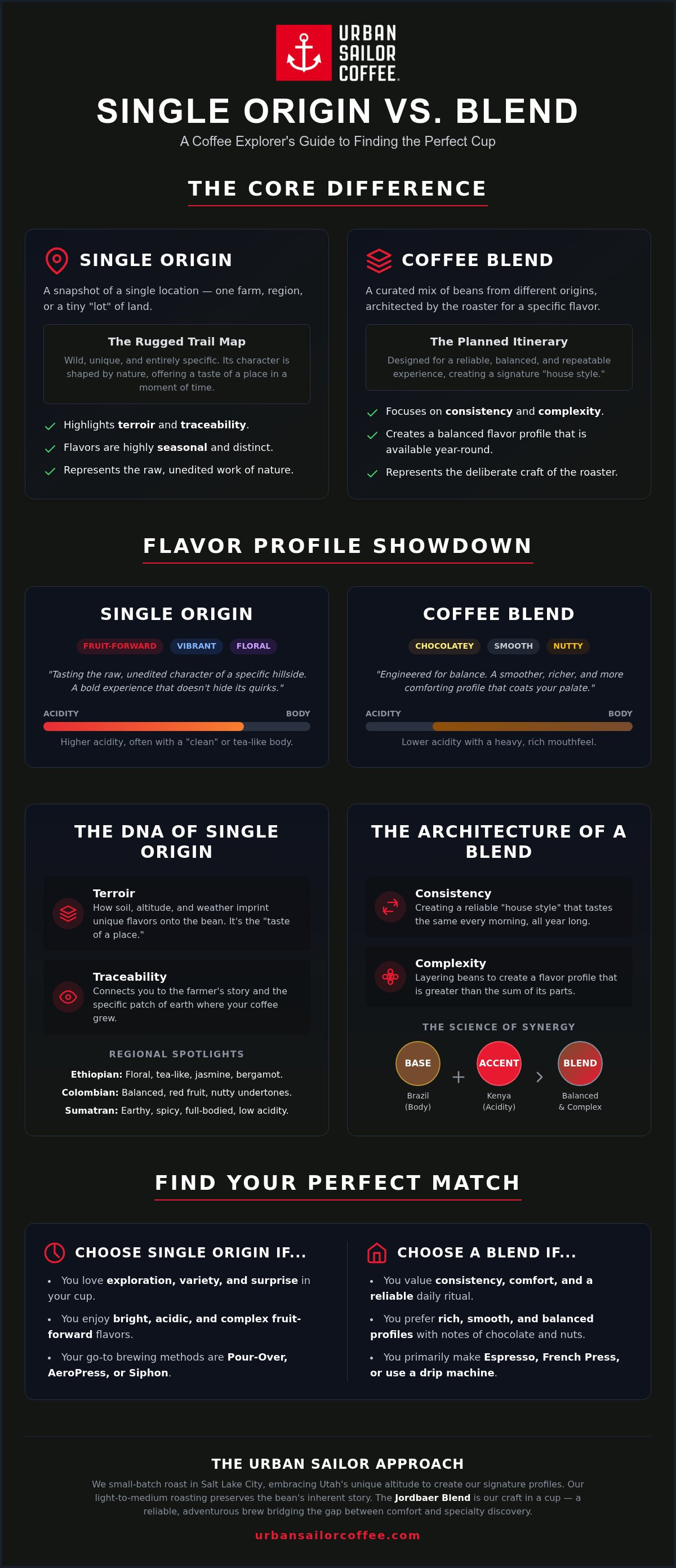
Picking between single origin vs blend coffee is the first step in mapping out your morning ritual. At its simplest, single origin coffee is a snapshot of a single location. These beans come from one specific farm, a small region, or even a tiny "lot" of land. On the other side, a coffee blend is a curated mix. Roasters combine beans from different countries or regions to architect a specific flavor profile. It is a deliberate act of craft. It is about intent.
Think of it like this: a single origin is a rugged trail map for a remote peak. It’s wild, unique, and entirely specific to that one spot. A blend is a well-planned itinerary. It’s designed to give you a reliable, balanced experience every time you head out. Roasters choose single origins when they want to highlight the raw work of nature. We choose to blend when we want to create something greater than the sum of its parts. Both have their place in your kitchen, but they offer very different adventures.
The Appeal of Single Origin: Terroir and Traceability
Specialty coffee lovers chase single origins because of terroir. This term describes how the soil, altitude, and local weather conditions imprint themselves on the bean. You might taste bright citrus from a high-altitude Ethiopian farm or deep chocolate from a volcanic Brazilian hillside. These flavors aren't added; they are grown. Because these are agricultural products from a single source, they are highly seasonal. When the harvest is gone, it’s gone until the next cycle. This traceability connects you directly to the farmer’s story and the specific patch of earth where your coffee grew. It is transparent and honest.
The Craft of the Blend: Consistency and Complexity
Blends are where the roaster acts as an architect. We choose beans for their individual strengths to create a house style that tastes the same every morning. If an African bean brings too much acidity, we balance it with a nutty, heavy-bodied South American bean. This creates a complexity that a single source might lack. Understanding the single origin vs blend coffee dynamic helps you realize that blends aren't "lower quality." They are simply a different style of exploration.
Our Jordbaer Blend is a perfect example of this craft. We small-batch roast it right here in Utah to be a reliable, adventurous cup that bridges the gap between traditional comfort and specialty discovery. It ensures your morning brew is always a victory, providing a smooth finish that works perfectly for those transitioning from grocery store beans to the world of specialty craft.
Flavor Profiles: What Should You Expect in the Cup?
The choice between single origin vs blend coffee usually comes down to what you want to feel on your tongue. Single origin beans are the "wild" child of the coffee world. They often carry a higher acidity and vibrant, fruit-forward notes that pop in light roasts. If you drink a single origin, you’re tasting the raw, unedited character of a specific hillside. It’s a bold experience that doesn't try to hide its quirks.
Blends offer a different kind of satisfaction. They are smoother, richer, and engineered for balance. You’ll typically find comforting notes of chocolate, toasted nuts, or caramel. This "Acidity vs. Body" debate is where most beginners find their footing. If you prefer a heavy mouthfeel that coats your palate, you’ll likely gravitate toward blends. Single origins can sometimes feel "thin" or tea-like to those used to traditional, dark-roasted grocery store coffee. At Urban Sailor Coffee®, we favor a light-to-medium roasting approach for both. This preserves the bean's inherent story without letting a heavy roast profile mask the unique flavors we worked so hard to source.
Identifying Single Origin Notes
Each region offers a distinct trail map of flavor. Ethiopian beans are famous for being floral and tea-like, often reminding drinkers of jasmine or bergamot. Colombian coffee usually hits a sweet middle ground with red fruit and nutty undertones. Sumatran beans are the outliers; they are earthy, spicy, and have very low acidity. When we talk about a "clean" cup, we mean a coffee where these specific notes shine through without any muddy or bitter aftertaste. It’s crisp and focused.
The Science of a Balanced Blend
Crafting a specialty blend is about layering. We start with a "base" bean, usually something from Brazil or Central America, to provide the heavy body and chocolatey foundation. Then, we add an "accent" bean, like a bright Kenyan, to provide a spark of acidity. This synergy is why blends are the secret behind the world's best espresso drinks. They provide the structural integrity to stand up to steam and milk without losing their soul. We cup and test our profiles constantly to ensure that even as harvests change throughout the year, your morning cup remains a reliable victory. To start your own flavor exploration, consider signing up for our coffee bean subscriptions to see which profile speaks to you.
How to Choose: A Decision Framework for Coffee Explorers
Choosing between single origin vs blend coffee shouldn't feel like a shot in the dark. It’s about auditing your morning ritual to see what actually fits your lifestyle. Before you grab the next bag of beans for your SLC kitchen, run through these three quick assessments to find your match.
- Assessment 1: How do you take it? If you reach for heavy cream or sugar, a delicate single origin will likely get lost. Blends are designed to stand up to additions.
- Assessment 2: What’s your risk tolerance? Do you want a "comfort" cup that tastes like a warm hug, or a "surprise" cup that might taste like blueberries or jasmine? Blends offer safety; single origins offer discovery.
- Assessment 3: What is on your counter? A standard drip machine is great for the reliable body of a blend. If you've invested in a precision pour-over setup, you’re ready to unlock the nuances of a single origin.
If you're just starting your specialty journey, use the "Trial Strategy." Start with a high-quality, craft-roasted blend. It trains your palate to recognize balance and structural integrity. Once you can identify those base chocolate and nut notes, you'll have a much better baseline for when you eventually dive into the wild acidity of a single farm bean. It’s about building your confidence one cup at a time.
Matching Coffee to Your Brew Method
Your equipment acts as the lens for your beans. Single origins shine in Pour-Overs and the AeroPress because these methods prioritize clarity. They let you taste the individual "pixels" of flavor without muddying the water. Blends are the MVPs for the French Press, automatic drip, and home espresso machines. These methods favor consistency and a heavy mouthfeel. For cold brew, we almost always recommend a blend. The long immersion time pulls out deep, chocolatey sweetness that makes for the smoothest iced experience possible during those hot Park City summers.
Milk, Sugar, and the 'Flavor Masking' Effect
Adding milk to a delicate Ethiopian single origin is like wearing earplugs to a symphony. You might still hear the music, but you'll miss the subtle violin solos. Those floral and tea-like notes are easily drowned out by fats and sugars. Blends are specifically architected to "cut through" milk. They maintain their soul even in a latte or cappuccino. If you want to appreciate the full spectrum of terroir, commit to drinking your single origins black. It’s the only way to see the full trail map of the bean's journey from farm to cup.
Brewing Tips for Single Origins and Blends
Once you’ve decided on the single origin vs blend coffee path, the adventure moves from the shelf to your counter. Brewing is where you either unlock the bean's potential or leave it behind in the grounds. It’s a craft that requires a few simple adjustments to get right. Start by following these four foundational steps to elevate your morning ritual.
- Step 1: Adjust your grind size. Single origin beans are often denser because they grow at higher altitudes. They benefit from a slightly finer grind to extract the hidden sweetness. Blends are usually more forgiving, so a medium-coarse setting works well for most home brewers.
- Step 2: Watch your water temperature. Boiling water is the enemy of flavor. Aim for 195°F to 205°F. If you're brewing a delicate floral single origin, stay on the lower end to avoid burning those volatile aromatics.
- Step 3: Dial in your ratio. Use a scale for consistency. A 1:16 ratio (one gram of coffee to 16 grams of water) is the gold standard. You can always tighten this to 1:15 if you want more "punch" from your blend.
- Step 4: Respect the resting period. Freshness is vital, but beans need to degas. Wait at least three to five days after the roast date before brewing. This allows CO2 to escape so the water can actually reach the flavor oils.
Dialing in Your Single Origin Pour-Over
A pour-over is the best way to see the "pixels" of a single origin. Don't skip the bloom phase. Pour twice the weight of the coffee in water and wait 30 to 45 seconds. You'll see bubbles rising; that's the coffee waking up. If the final cup tastes sour, you’ve under-extracted. Grind finer next time. If it’s harsh and bitter, you’ve over-extracted. Go coarser. Because single origins are so transparent, use filtered water. Tap water minerals can easily mask the subtle terroir you’re paying for.
Perfecting the Everyday Blend in a Drip Machine
You don't need a thousand-dollar setup to enjoy our Jordbaer Blend. To get coffee shop quality at home, keep your gear clean. Old coffee oils go rancid and will ruin the balance of even the best craft blend. Store your beans in a cool, dark, airtight container; never the freezer. To keep your pantry stocked with fresh-roasted options, explore our coffee bean subscriptions so you never have to settle for stale grocery store beans again.
The Urban Sailor Approach: Roasting for the Utah Explorer
Roasting at 4,226 feet in Salt Lake City isn't just about the scenery. It changes the physics of how heat interacts with the bean. Because of the lower air pressure at our altitude, we can manipulate roast curves to preserve delicate sugars and volatile aromatics that often get scorched at sea level. This unique Utah environment is where Urban Sailor Coffee® refines the single origin vs blend coffee debate into a tangible experience. We don't just sell beans; we share the results of our own discovery in the high desert, ensuring every roast reflects the rugged freedom of the West.
The story of our Jordbaer Blend is the heart of this approach. We designed it as a bridge for those who want the reliability of a blend but crave the adventurous notes of a specialty bean. It combines a heavy, chocolatey body with a bright, strawberry-like finish. This profile didn't happen by accident. Our years of experience in mobile coffee bar catering taught us exactly what people look for in a morning ritual. Urban Sailor Coffee® exists to prove that you shouldn't have to choose between comfort and exploration.
Small-Batch Integrity in SLC
Roasting in small quantities is the only way to ensure artisanal integrity. It allows us to monitor every second of the development process so every bag is at peak freshness when it reaches your door. We are committed to sourcing exclusively from ethical, sustainable farms where transparency is the standard. This small-scale focus means we can pivot with the seasons, bringing you the freshest harvests from around the globe. Whether you find us at our mobile bar in Park City or visit our home base in Salt Lake City, you're tasting a commitment to the craft of the roast.
Your Next Step: The Coffee Subscription
The best way to train your palate is through consistent, guided variety. We offer coffee bean subscriptions to help you explore the nuances of single origin vs blend coffee without the risk of a bad brew. You can customize your delivery to rotate between our wilder, fruit-forward single origins and our dependable signature blends. Because we roast locally, your beans move from our shop to your door in days, not weeks. Check out our guide to the best coffee beans in Salt Lake City to see what we're currently excited about. Join Urban Sailor Coffee® on this journey and find the bean that turns your morning routine into a repeatable adventure.
Chart Your Path to the Perfect Cup
Deciding between single origin vs blend coffee is the first step toward a morning ritual you actually enjoy. You've learned that single origins offer a wild, seasonal snapshot of a specific farm, while a craft blend provides the balanced, chocolatey anchor your daily routine might need. Whether you're dialing in a precise pour-over or seeking consistency in a home drip machine, you now have the framework to choose with confidence.
We make the exploration easy by roasting in small batches right here in Salt Lake City. Urban Sailor Coffee® provides the same beans used daily in our professional mobile coffee bars, sourced through eco-friendly and sustainable practices that respect the land and the producer. Every bag is an invitation to join a story of craft and rugged freedom. Grab your gear and get ready for a better brew.
Start Your Coffee Adventure: Shop Urban Sailor Coffee® Roasts
Your next great discovery is waiting in the pot. Keep exploring, stay curious, and enjoy every sip of the journey.
Frequently Asked Questions
Is single origin coffee always better than blended coffee?
No, single origin is not inherently better than a blend; they simply serve different purposes. When you weigh the single origin vs blend coffee debate, remember that "better" is entirely subjective. Single origins highlight the unique, often wild characteristics of a specific region or farm. Blends are crafted for a specific flavor profile that remains consistent year-round. While coffee enthusiasts often chase the rare notes of a single farm, a high-quality blend offers a reliable, balanced experience.
Why is single origin coffee usually more expensive?
Single origin coffee usually carries a higher price tag because of traceability and scarcity. These beans come from smaller, often seasonal harvests that require more labor-intensive farming and processing. Roasters pay a premium for the distinct flavor profiles and the ethical sourcing required to track beans back to a single lot. In contrast, blends allow roasters to balance costs by mixing various high-quality beans to maintain a specific price point while delivering a consistent flavor.
Can I use single origin beans for espresso?
You can certainly use single origin beans for espresso, but be prepared for a challenge. These beans often have higher acidity and lighter bodies, which can result in a "bright" or even sour shot if not dialed in perfectly. Most cafes use a blend for espresso because the combined beans create the thick crema and chocolatey finish that stand up well to milk. If you want a fruity, punchy shot, go for a single origin.
What does 'terroir' actually mean in coffee?
Terroir refers to the environmental factors that give a coffee its unique soul. This includes the specific soil composition, the altitude of the farm, and the local weather patterns during the growing season. Just like in wine, these elements impact the bean's chemical makeup and final flavor. When you compare single origin vs blend coffee, single origin is the purest expression of terroir because it hasn't been mixed with beans from different climates.
How long do roasted coffee beans stay fresh?
Roasted coffee beans hit their peak flavor between seven and twenty-one days after the roast date. During this window, the beans have finished degassing but haven't yet lost their volatile aromatic oils. While beans are safe to drink for months, the subtle notes of a single origin will start to fade after four weeks. To keep them fresh, store your beans in an airtight container in a cool, dark place rather than the freezer.
Which type of coffee has more caffeine: single origin or blend?
The type of bean doesn't determine caffeine content as much as the species and brew method do. Most specialty coffee, whether single origin or blend, uses Arabica beans, which naturally have less caffeine than Robusta. A blend might contain more caffeine if a roaster includes Robusta for extra "kick" and crema, but in the specialty world, the difference is negligible. Your caffeine intake is mostly influenced by how much ground coffee you use per cup.
Should I buy whole bean or ground coffee?
Always buy whole bean coffee if you have a grinder at home. Once coffee is ground, the surface area increases, causing the beans to oxidize and lose flavor within minutes. Buying whole beans preserves the intricate aromas and ensures a much more vibrant cup. If you don't have a grinder, buy small bags of ground coffee frequently to ensure you are drinking the freshest product possible before the flavor goes flat.
What is the best coffee for someone who likes to add milk?
Blends are almost always the best choice for milk drinkers. They are specifically designed with a heavy body and deep, sugary notes like caramel and cocoa that stand up to the fat in milk or cream. A delicate, tea-like single origin often gets lost or tastes unpleasantly acidic when you add dairy. For a reliable latte or morning cup with cream, a well-crafted blend provides the structural integrity needed for a balanced taste.