


That premium bag of beans on your counter might already be past its prime. In the specialty coffee world, the window for peak flavor is narrow, usually hitting its stride between 4 and 14 days after roasting. If you're tired of searching for local coffee roasters near me only to end up with beans that taste bitter or flat, you're not alone. Many enthusiasts feel stuck when staring at labels mentioning anaerobic processes or natural fermentation without any clear explanation of where the coffee actually came from.
Finding your next favorite bag should feel like an adventure, not a chore. You deserve a cup that reflects the rugged spirit of the craft and the precision of a small-batch roast. We're going to show you exactly how to evaluate a roaster's transparency and quality standards. You'll learn how to decode technical labels, understand the difference between commercial and specialty production, and find a reliable partner in the Salt Lake City area. From ethical sourcing to fresh bean delivery, we're diving into the professional criteria that ensure your morning ritual never tastes stale again.
Key Takeaways
- Identify the peak freshness window to ensure you are brewing beans at their flavor summit rather than settling for stale commercial stock.
- Use our professional criteria to vet local coffee roasters near me based on sourcing transparency, roast diversity, and ethical trade practices.
- Navigate the differences between light and dark roasts to find a profile that balances bright acidity with the rugged sweetness of a high-desert brew.
- Learn why seasonal sourcing matters and how choosing a roaster with direct farm partnerships creates a more transparent and sustainable coffee journey.
- Simplify your daily routine by setting up a recurring bean delivery that brings small-batch craft directly to your doorstep in Salt Lake City.
Why Freshness Matters: The Local Roaster Advantage
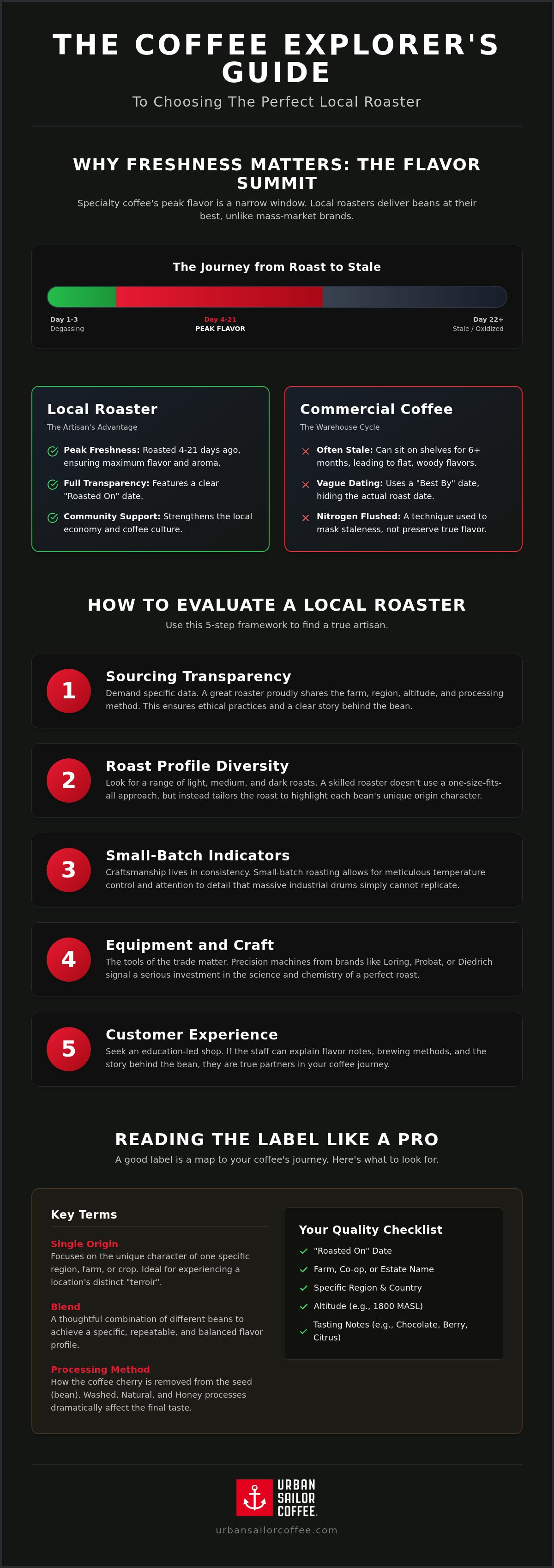
Freshness isn't just a marketing buzzword; it's the chemistry that defines your morning. Most specialty coffee hits its peak between day 4 and day 21 after the roast. During this window, the beans have finished degassing but haven't yet succumbed to the dullness of oxidation. When you search for local coffee roasters near me, you're looking for that specific flavor summit. You're bypassing massive commercial warehouse cycles that leave beans sitting on shelves for six months or more. Large-scale brands prioritize shelf life over flavor profile. They often use nitrogen flushing to mask the fact that the beans are technically stale by the time they reach you.
The #1 rule for any coffee explorer is simple: look for the "Roasted On" date. If a bag only shows a "Best By" date, put it back. A local roaster in Salt Lake City provides a specific timestamp of when the beans left the drum. This transparency ensures you're buying at the flavor peak, not the valley. Proximity matters because it cuts the time between the cooling tray and your grinder to almost zero. In the high desert of Utah, where the air is dry, protecting that freshness window is even more critical for preserving the bean's natural oils.
The Science of Stale Coffee
The process of roasting coffee triggers complex chemical reactions that create the aromas we love. However, the moment the roast ends, oxidation begins. This process strips away the delicate floral and fruity notes that make specialty coffee unique. Grocery store coffee often lacks CO2, which is the natural preservative that protects these flavors during the first week. Without it, the coffee tastes flat and woody. Small-batch roasting ensures that the CO2 levels are still active when the beans arrive at your home, creating that beautiful bloom during your pour-over.
Supporting the SLC Community
Choosing a local roaster like Urban Sailor Coffee® does more than just improve your brew. It fuels the local Utah coffee culture. Every bag purchased supports small-batch artisans who have transitioned from nomadic mobile units to community-rooted experts. There are also significant environmental benefits to this choice. Instead of beans traveling thousands of miles through a national distribution network, they move just a few miles across the Wasatch Front. It's a faster, cleaner journey that respects both the craft and the planet while keeping your investment within the local economy.
How to Evaluate a Local Roaster: A 5-Step Guide
Finding a reliable partner for your morning ritual requires more than a quick search for local coffee roasters near me. You need a framework to separate genuine artisans from commercial giants wearing a craft mask. Use these five criteria to vet your next roastery and ensure their standards match your expectations for quality and flavor.
- Sourcing Transparency: Demand specific data on the farm, region, and altitude. Understanding responsible coffee sourcing practices ensures that the premium you pay supports the farmers directly rather than disappearing into a complex supply chain.
- Roast Profile Diversity: A skilled roaster offers a range of light, medium, and dark options tailored to the bean's origin. They shouldn't hide the bean's character behind a uniform char.
- Small-Batch Indicators: Consistency is the hallmark of craft. Smaller roasts allow for tighter temperature control and meticulous attention to detail that massive industrial drums cannot replicate.
- Equipment and Craft: Investigate the tools of the trade. Precision machines from heritage brands like Loring, Probat, or Diedrich indicate a serious investment in the chemistry of the roast.
- Customer Experience: Seek out education-led shops. If the staff can't explain the flavor notes or the story behind the bean, they're just processing transactions rather than fostering a community.
If you want to experience this level of craft firsthand, explore the small-batch offerings at Urban Sailor Coffee®. We prioritize the journey of the bean from the high-altitude farm to your cup, ensuring every bag reflects our commitment to the craft.
Reading the Label Like a Pro
Labels are the map to your coffee's journey. A "Single Origin" label focuses on the unique character of one specific region or farm. In contrast, a thoughtfully crafted "Blend" like the Jordbaer Blend highlights the roaster's ability to balance different beans to achieve a specific, repeatable flavor goal. Look for processing methods as well. Washed coffees usually taste clean and bright, while natural and honey processes yield fruity, wine-like notes. Pay close attention to elevation; beans grown at higher meters above sea level are denser and often pack more complex sugars and acidity.
The Importance of Q-Graders and Cupping
Quality control is the backbone of an expert roastery. Many top shops employ Q-Graders, who are certified professionals with palates capable of identifying subtle defects and grading bean quality on a standardized scale. These experts use a ritualized process to ensure every batch meets the roastery's standard before it ever hits the shelf. Cupping is the industry-standard method for evaluating coffee aroma and flavor profile. By tasting coffee in this controlled environment, roasters can identify the exact "sweet spot" for each roast level, guaranteeing that your home brew remains consistent bag after bag.
Finding Your Profile: Light vs. Dark Roasts in the High Desert
The high desert of Utah presents a unique challenge for coffee lovers. When you look for local coffee roasters near me, you aren't just buying beans; you're buying a profile that has to survive SLC’s thin, dry air. Light roasts are the choice for purists. They preserve the origin character, offering bright acidity and floral notes that tell the story of the farm. Medium roasts hit the sweet spot, balancing sweetness, body, and acidity. Dark roasts shift the focus to the roasting process itself. These beans are often oily and bold, delivering those classic chocolate and smoky notes that stand up well to cream.
Brewing in Salt Lake City requires an adjustment in technique. Our high altitude means water boils at a lower temperature, usually around 202 degrees. This affects how quickly you extract flavors. If you're used to sea-level brewing, you might find your light roasts tasting a bit sour unless you extend your brew time or use a finer grind to compensate for the lower heat. The dry climate also means your beans can lose moisture faster, so keeping your bags sealed tight is non-negotiable for maintaining that peak freshness window we discussed earlier.
The Jordbaer Blend: A Study in Balance
Our Jordbaer Blend serves as a perfect entry point for those new to the specialty scene. It's a specialty staple that captures the essence of a balanced roast, offering a smooth transition from commercial coffee to craft quality. We recommend using a pour-over or a high-quality drip machine for this profile. These methods allow the nuanced sweetness to shine without being overwhelmed by the bitterness often found in over-extracted darker roasts. It's a reliable "go-to" for any adventurer's morning ritual.
Matching Roast to Method
Your choice of equipment should dictate your roast selection. For instance, espresso beans need a specific roasting approach to handle the intense pressure of an espresso machine. A medium-dark roast often works best here to cut through milk and provide a rich crema. If you prefer the immersion of a French Press, a darker roast provides the heavy body you crave. For AeroPress explorers, the versatility of the device allows you to experiment with light roasts to highlight bright acidity. Always remember to adjust your grind size. Lighter roasts usually need a slightly finer touch to extract properly, while darker roasts benefit from a coarser setting to avoid a burnt aftertaste.
Sourcing and Ethics: The Story Behind the Bean
When you scout for local coffee roasters near me, look past the bag design to see the ethical framework underneath. Direct Trade is the gold standard for artisans. While Fair Trade provides a vital safety net floor price, Direct Trade involves roasters negotiating directly with farmers. This often results in premiums far above standard market rates, ensuring the people growing the cherries can actually thrive. At Urban Sailor Coffee®, we see this as a shared journey. We value the independence and stories of the growers who make our craft possible, favoring partnerships that respect the meticulous labor involved in every harvest.
Coffee is a seasonal fruit. It doesn't grow year-round in one location. Roasters committed to quality follow the harvest cycles across the equator, from the mountains of Ethiopia to the volcanic soil of Guatemala. This means your beans arrive at the roastery just weeks after being processed at the source. Sustainability also plays a role in our SLC community. We focus on energy-efficient roasting and minimizing waste, ensuring the rugged landscapes we love remain protected for the next generation of explorers.
The Journey of the Bean
The path from a flowering coffee cherry to a green bean in Utah is long and fragile. Small-batch roasters pay a premium for "Specialty Grade" green coffee. This isn't just a fancy title; it requires a score of 80 or above on a 100-point scale. Climate change is making this harder. Rising temperatures are forcing high-altitude coffee farming regions even further up mountain slopes, reducing available land. By choosing specialty roasters, you support farmers who are adapting to these shifts through regenerative agriculture and sustainable land management.
Wholesale and Business Ethics
Local craft doesn't stop at your home kitchen. Our wholesale coffee partnerships elevate the entire SLC dining scene, from Park City cafes to downtown offices. Transparency matters for any business looking to serve local craft. A roaster's role extends into training these partners, ensuring they understand grind profiles and water chemistry to maintain quality consistency. This collaborative spirit bridges the gap between the producer and the final consumer, making every cup part of a larger community narrative.
Ready to bring this level of transparency to your own daily ritual? Explore our collection of small-batch roasted beans and join the journey today.
Experiencing Local Coffee: Subscriptions and Events in SLC
Finding the best local coffee roasters near me is about more than just a one-time purchase. It's about weaving a sense of adventure into your daily routine and your biggest milestones. In Salt Lake City, the coffee scene has moved beyond the shop counter. It now follows you into the mountains and into your backyard celebrations. Your gear should reflect this lifestyle. A rugged Trucker Cap or a durable Camping Enamel Mug serves as a badge of honor for the modern explorer. These items aren't just accessories; they're functional tools for those who value craft and movement in equal measure.
Never Run Out: The Subscription Model
Managing your coffee supply shouldn't feel like a logistical puzzle. By opting for coffee bean subscriptions, you ensure that peak freshness is always within reach. You can easily customize your delivery frequency and roast preferences to suit your household's needs. This recurring model offers a unique "surprise and delight" element, often introducing you to new single-origin beans that you might not have discovered on your own. Beyond the convenience, subscriptions play a critical role in the sustainability of the roastery. They provide the predictable demand needed to plan green coffee buys months in advance. This stability allows roasters to maintain those vital partnerships that keep the specialty industry thriving.
Mobile Coffee Bar Catering for Utah Events
Specialty coffee is a communal experience that belongs at your most important gatherings. The growth of mobile coffee catering has made it possible to bring a full-service barista bar to any venue in SLC or Park City. Whether it's a high-altitude wedding or a downtown corporate launch, a professional mobile setup provides an immediate upgrade to the atmosphere. Roasters handle the complex logistics, from water filtration to power requirements, ensuring a seamless experience for the host. It allows guests to engage with the craft, asking questions about the roast profile and watching the meticulous preparation of their drinks. This social setting turns a simple beverage into a conversation piece. It honors the spirit of mobility that defines the best local artisans, proving that high-end craft doesn't need to be anchored to a single spot.
Fuel Your Next Adventure with Small-Batch Craft
The journey from a flowering cherry to your morning cup is defined by the precision of the roast and the transparency of the source. By prioritizing the peak freshness window and demanding ethical sourcing data, you ensure your investment supports both quality and community. Understanding the story behind the bean transforms a simple drink into a shared discovery. Searching for local coffee roasters near me is the first step toward reclaiming your morning ritual from stale, commercial cycles. Whether you're brewing at high altitude in Salt Lake City or hosting a social gathering in Park City, the right beans make the difference.
Urban Sailor Coffee brings this artisanal integrity to every bag. Our small-batch roasted beans are crafted right here in SLC to ensure maximum flavor. Beyond the bean, we offer professional mobile coffee catering for events and rugged lifestyle gear for your Utah outdoor excursions. It's time to stop settling for bitter, mystery blends and start exploring the true potential of the bean.
Explore the Jordbaer Blend and Start Your SLC Coffee Adventure
Keep exploring, keep brewing, and enjoy the ride.
Frequently Asked Questions
How do I find the best local coffee roasters near me in Salt Lake City?
Finding the best local coffee roasters near me starts with looking for shops that roast on-site or provide a "roasted on" date. Visit local farmers markets or search for specialty roasters along the Wasatch Front. Check for transparency regarding farm origins and altitude. Urban Sailor Coffee specializes in small-batch roasting in SLC, focusing on the Jordbaer Blend. Exploring these hubs ensures you find craft quality that avoids the stale commercial supply chain.
What is the difference between grocery store coffee and local roasted beans?
Freshness and sourcing transparency are the primary differences. Grocery store beans often sit in warehouses for months, losing their delicate aromatic compounds through oxidation. Local roasters focus on the "freshness window," typically 4 to 21 days post-roast. While commercial brands prioritize shelf life, local artisans focus on flavor profiles. We use small-batch methods to preserve the unique characteristics of specialty-grade beans that mass production simply can't replicate.
How long does fresh roasted coffee stay good?
Coffee is at its peak between 4 and 21 days after the roasting date. During this period, the beans have finished degassing but haven't yet been dulled by oxygen. You can still enjoy the coffee for up to six weeks if stored in an airtight container away from light. However, those vibrant floral and fruity notes will start to fade. Always check the bag for a specific "roasted on" date rather than a "best by" expiration.
Do local roasters offer coffee bean subscriptions in Utah?
Yes, many local coffee roasters near me in Salt Lake City offer recurring delivery services. Urban Sailor Coffee provides coffee bean subscriptions that bring fresh, small-batch roasts directly to your doorstep. These services allow you to customize your delivery frequency and roast preferences. It's the most reliable way to ensure you never run out of adventure. Subscriptions also support roasters in maintaining sustainable, direct partnerships with farmers by providing predictable demand.
Can I book a local roaster for mobile coffee catering at my event?
You can absolutely bring a professional barista experience to your next gathering. Urban Sailor Coffee offers mobile coffee bar catering for events in Salt Lake City and Park City. We handle the logistics of bringing a high-quality setup to weddings, corporate launches, or private parties. This allows your guests to experience specialty craft in a social setting. It's a great way to elevate the atmosphere while supporting a local independent business.
What should I look for on a specialty coffee bean label?
Look for specific details like the farm name, region, elevation, and processing method. A "single origin" label indicates the beans come from one specific place, while a blend like our Jordbaer Blend shows a roaster's skill in balancing flavors. Processing terms like "washed" or "natural" tell you how the fruit was removed. Most importantly, ensure there is a clear roast date so you know you're buying within the peak window.
Is local roasted coffee more expensive than commercial brands?
Specialty coffee typically carries a higher price point because it involves Direct Trade and higher quality standards. Roasters pay a premium for specialty-grade green coffee, which must score 80 or higher on a 100-point scale. This investment supports sustainable farmer wages and meticulous small-batch production. While you might pay more per bag than at a discount grocer, the value lies in the superior flavor, peak freshness, and ethical transparency provided by the roaster.
How does altitude in SLC affect how I should brew my coffee?
Salt Lake City's high altitude causes water to boil at a lower temperature, roughly 202 degrees Fahrenheit. This lower heat can lead to under-extraction, especially with light roasts. To compensate, you may need to extend your brew time or use a slightly finer grind. The dry Utah air also means your beans can lose moisture quickly. Keep your bags tightly sealed and consider adjusting your technique to extract the full sweetness from your small-batch beans.