


That oily, jet-black bean you’ve been told is "classic espresso" might actually be the reason your home shots taste like burnt rubber. Many home baristas believe that the darker the roast, the better the crema, but the truth is often found in the nuanced middle ground. It’s incredibly frustrating to invest in high-end equipment only to waste expensive espresso beans on shots that are either sour or hollow. You want that thick, honey-like pour you get at your favorite local shop, and you want it every single morning.
We’re here to help you bridge that gap. This 2026 guide is designed to transform your kitchen into a high-performance coffee station by mastering the art of bean selection. You’ll learn how to read roast profiles like a pro, identify the "sweet spot" for extraction, and find a reliable go-to bean that never lets you down. We’re diving into everything from understanding altitude’s impact on flavor to why specialty options like the Jordbaer Blend are redefining what a modern espresso can be. It’s time to stop guessing and start pulling the best shots of your life.
Key Takeaways
- Demystify the "espresso roast" label and learn why bean species, rather than just darkness, determines the body and sweetness of your shot.
- Understand the "peak flavor window" to ensure your espresso beans are fresh enough to produce a rich, cafe-quality crema.
- Compare the consistency of traditional blends against the bold, experimental notes of single-origin beans to find your perfect daily driver.
- Master the 1:2 brewing ratio and learn how to use grind size adjustments to eliminate sour or bitter notes in every pull.
- Explore how small-batch roasting in Salt Lake City provides a freshness advantage that mass-produced, shipped beans simply can't match.
Understanding the 'Espresso Bean' Myth: It's a Profile, Not a Plant
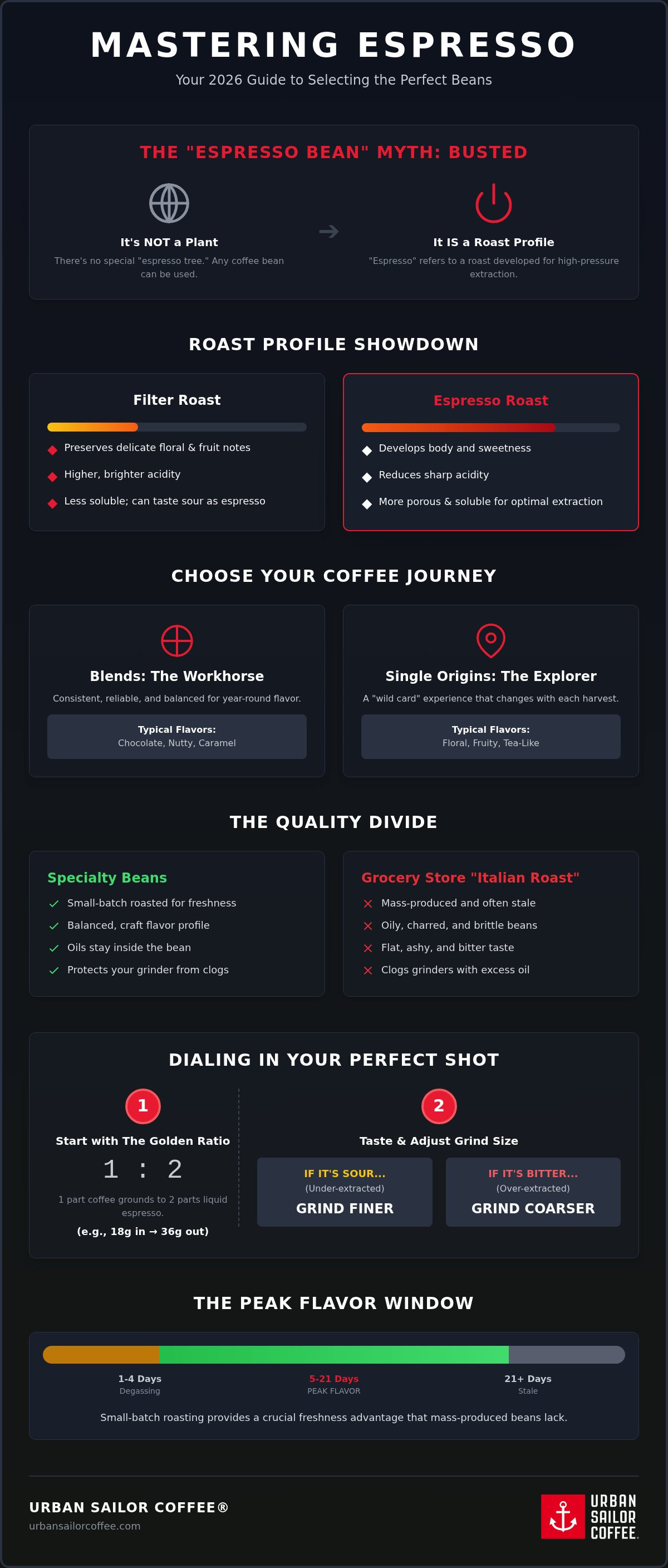
Walk into any specialty shop in 2026 and you'll see bags labeled specifically for espresso. It's a common misconception that these come from a different type of coffee tree. In reality, an espresso bean is defined by its roast profile and intended use, not its genetics. To truly grasp What is espresso?, you have to understand that it’s a method of extraction under intense pressure. This process demands a bean that can dissolve quickly and balance out intense oils. We live by the Explorer’s Rule: while you can technically turn any coffee into espresso, not every bean is built for the journey. Light roasts often lack the solubility needed for a 30-second pull, resulting in a shot that tastes like sour grass. Most espresso beans are roasted longer to ensure they play well with high pressure and high temperatures.
In the world of blending, roasters often choose between two main species: Arabica and Robusta. Arabica is prized for its nuanced flavors and sweetness, while Robusta is often added to traditional blends to boost caffeine and create a thick, resilient crema. In 2026, the trend has shifted toward 100% specialty Arabica blends that prioritize clarity and fruit-forward notes over simple bitterness. Choosing the right species depends on whether you want a classic, punchy shot or a modern, complex experience.
Espresso Roast vs. Filter Roast: What’s the Difference?
Roasting is where the character of the bean is forged. During the Maillard reaction, sugars brown and acids soften. Filter roasts stay light to preserve delicate floral notes and bright acidity. Espresso roasts are developed further in the drum to reduce sharp acidity and increase body. This extra development time makes the bean more porous and soluble. It ensures that when nine bars of pressure hit the puck, the water can extract enough solids to create a balanced, syrupy mouthfeel and that iconic golden crema.
Why Specialty Beans Win Over Grocery Store Blends
Grocery store shelves are often lined with "Italian Roast" bags that look like they've been dipped in motor oil. These greasy, charred beans are a nightmare for your home equipment. They clog grinders and produce a flat, bitter cup that tastes like ash. At Urban Sailor Coffee®, we ditch the charcoal approach for small-batch integrity. Our Jordbaer Blend proves that you can have a bold, adventurous profile without sacrificing the bean’s natural character. Choosing specialty espresso beans means you're getting a balanced craft product, not a burnt commodity. Small-batch roasting ensures the oils stay inside the bean until you're ready to brew, protecting your grinder and your palate.
Decoding the Espresso Flavor Profile: Blends vs. Single Origins
Choosing your espresso beans feels like standing at a crossroads. On one side, you have blends. They’re the reliable workhorses of the coffee world. Roasters craft them to hit a specific flavor target year-round, usually leaning into chocolatey, nutty, and caramel notes. On the other side, single origins are the explorers. They come from one specific farm or region, offering a "wild card" experience that changes with every harvest. If you want a shot that tastes exactly like the one you pulled last Tuesday, go with a blend. If you want to be surprised by floral or tea-like notes, reach for a single origin.
The journey from cherry to bag also dictates your results. Washed coffees are clean and bright with high clarity. Natural process beans, dried with the fruit still on, bring a heavier body and funky, berry-like sweetness. Our Jordbaer Blend acts as a perfect bridge between these worlds. It combines the dependable body of a classic espresso with the vibrant strawberry notes of a modern specialty roast. It’s the best option for those who want adventure without the guesswork. To keep the discovery going, you can explore our coffee bean subscriptions for a rotating selection of fresh roasts.
The Role of Acidity, Body, and Sweetness
Think of these as the "Holy Trinity" of a great pull. Acidity provides the spark, sweetness brings the balance, and body creates that syrupy mouthfeel. Beans grown at high altitudes, like those we roast in Salt Lake City, often develop a denser structure. This density translates into a complex acidity that you won't find in low-grown commodity coffee. When you read a label, look for flavor descriptors. Stone fruit and berries usually signal higher acidity, while cocoa or molasses point toward a heavier, sweeter body in your espresso beans.
When to Choose a Single Origin for Your Portafilter
Single origins are best enjoyed as straight shots or short milk drinks like cortados. If you’re making a large latte, the delicate nuances of a light-roast Ethiopian bean will get lost in the milk. In fact, those bright beans can taste like sour tea if you don't know how to dial in espresso properly. There’s a steeper learning curve here. You’ll need to adjust your temperature and yield to find the sweetness hidden behind the acidity. It’s a challenge, but the reward is a unique cup that tells the story of a single hillside halfway across the world.
Sourcing for Freshness: The SLC Local Advantage
The journey to a perfect shot doesn't end at the roaster; it actually begins there. Many home baristas make the mistake of buying espresso beans from big-box retailers where bags might sit for months. In 2026, we know that the "Peak Flavor Window" for espresso falls between 7 and 21 days after roasting. During this time, the beans have settled enough to provide a stable extraction while retaining their most vibrant aromatic compounds. If you buy coffee shipped from overseas, you're likely receiving a product that has already passed its prime. Sourcing locally in Salt Lake City ensures you're hitting that sweet spot every time you lock in your portafilter.
Utah's unique environment also plays a role in your brew. Our dry, high-altitude climate at over 4,200 feet speeds up the degassing process compared to humid coastal regions. This means your beans might be ready to brew a day or two earlier than expected. When shopping, always look for a "Roast Date" rather than an "Expiration Date." An expiration date is just a guess at when the coffee will become undrinkable. A roast date is a transparent marker of quality that tells you exactly where your coffee is in its life cycle.
The Degassing Phase: Why You Shouldn't Brew Day-One Beans
Brewing beans straight out of the cooling tray is a mistake. Freshly roasted coffee is packed with carbon dioxide. If you try to pull a shot on day one, that gas will escape violently when it hits hot water, creating uneven channels in your coffee puck. This leads to a shot that's both sour and bitter at the same time. You need to let your espresso beans rest. To protect them during this phase, keep them away from the "Big Three" enemies of flavor: light, heat, and oxygen. Use an opaque, airtight container stored in a cool pantry. Don't put them in the freezer; the moisture and temperature swings will destroy the delicate cell structure and kill the flavor.
Leveraging Local SLC Subscriptions
Consistency is the secret to great espresso. If you're constantly switching between random bags, you'll spend more time "dialing in" than actually enjoying your coffee. A local subscription provides a steady stream of fresh roasts delivered right to your door in Park City or SLC. This ensures you never run out of beans and that every bag you open is at its peak. For those ready to commit to a better morning ritual, check out The Ultimate Guide to Coffee Bean Subscriptions in SLC. It’s the easiest way to keep your adventure going without leaving your kitchen.
How to Dial In Your Espresso Beans: A Step-by-Step Discovery
Dialing in your espresso is where the craft meets the road. It’s the process of fine-tuning your variables to find the "sweet spot" of extraction. In 2026, we don't guess; we measure. Every bag of espresso beans behaves differently based on its roast date and origin. To master this, you must treat your kitchen like a lab and your palate like a compass. Follow these steps to transform a mediocre shot into a cafe-quality masterpiece.
- Step 1: Lock in your ratio. Start with the 1:2 industry standard. If you put 18 grams of ground espresso beans into your portafilter, aim for 36 grams of liquid espresso in your cup. This gives you a baseline to judge flavor without wandering into the weeds.
- Step 2: Command your grind size. This is your most powerful tool. If your shot pulls in 15 seconds and tastes sour, your grind is too coarse. If it takes 40 seconds and tastes like ash, you've gone too fine. Adjust in small increments to find the balance.
- Step 3: Monitor time and yield. Use a timer to track your pull. Aim for that 36-gram yield to hit between 25 and 30 seconds. This window usually provides the most balanced extraction of sugars and oils.
- Step 4: The Taste Test. Trust your tongue. Under-extracted shots are salty or sharp. Over-extracted shots are dry and bitter. You want the syrupy sweetness that lingers on the back of your throat.
Fine-Tuning for Different Roasts
Different roasts require different strategies. Darker roasts are more soluble, meaning they give up their flavors easily. Use cooler water, around 195°F, and a slightly coarser grind to avoid over-extracting bitter notes. Light roasts are the opposite. They’re dense and stubborn. Push your water temperature to 205°F and grind finer to extract that hidden complexity. Our Jordbaer Blend is a fantastic practice partner for this journey. Its balanced profile is forgiving, allowing you to learn the ropes without wasting an entire bag on "sink shots."
Essential Gear for the Home Explorer
Your espresso machine is just the engine; your grinder is the steering wheel. A high-quality burr grinder is essential for creating the uniform particles needed for even extraction. Without it, you'll never achieve a consistent crema. Pair your grinder with a digital scale to remove the guesswork. Measuring by volume is a relic of the past; measuring by weight is how you guarantee a perfect morning ritual. Before you start your next session, consult our guide on the Best Coffee Beans in Salt Lake City to find a roast that matches your gear. Ready to pull your first pro-level shot? Grab a bag of our signature Jordbaer Blend and start your brewing adventure today.
Join the Adventure: Why Urban Sailor Coffee® is Your Guide
Our journey didn't start in a sterile office; it began on the open road with a Ural sidecar motorcycle. That nomadic spirit still fuels Urban Sailor Coffee® as we’ve grown into a trusted specialty authority across Salt Lake City and Park City. We’ve traded the constant movement of the early days for a deep-rooted presence in the local community, but our commitment to the craft hasn’t changed. Every bag of our espresso beans represents a collaborative effort between our roasting team and the dedicated producers we partner with. We aren't interested in mass-market volume. We prioritize meticulous, small-scale production that honors the story behind every harvest.
When you choose Urban Sailor Coffee®, you aren't just buying a product; you’re joining an ongoing narrative of artisanal integrity. We roast in small batches right here in SLC to ensure every bean reaches its full potential. This local focus isn't just about pride; it’s about ensuring the quality of your morning ritual remains unmatched. By supporting a local Utah roaster, you’re helping sustain a vibrant, independent coffee culture that values flavor over convenience. We’ve transitioned from a grassroots mobile model to an established expert, and we want to share that expertise with every home barista in the valley.
Experience the Jordbaer Blend
As our signature profile, the Jordbaer Blend serves as the ultimate introduction to our roasting philosophy. It captures the adventurous spirit of the West with its vibrant strawberry and sugary notes. Whether you’re gearing up for a dawn patrol session in Park City or a busy morning in downtown Salt Lake, this blend provides the consistent excellence you need. We invite you to visit our cafe locations to experience a professional tasting. Seeing our baristas pull a shot of these espresso beans in person is the best way to understand the balanced, sweet clarity we strive for in every roast.
Mobile Catering and Beyond
Our roots in mobile catering have taught us more about espresso than any textbook could. High-volume environments are demanding. They require beans that are stable, predictable, and exceptionally flavorful under pressure. We take those lessons from the sidecar and apply them to our roasting drum every single day. This expertise ensures that the beans you brew at home are the same high-caliber roasts trusted by top-tier event planners across the Wasatch Front. If you want to bring this level of craft to your own space, Explore our Coffee Bean Subscriptions to keep your home adventures fueled with peak-freshness roasts.
Elevate Your Home Barista Journey
You’ve explored the science of roast profiles and discovered the local freshness advantage that Salt Lake City offers. Now it's time to put that knowledge into action. Mastering your morning ritual means moving beyond commodity coffee and choosing espresso beans that reflect a commitment to artisanal craft. By selecting small-batch roasts like our Jordbaer Blend, you’re bringing a piece of the Utah mountains into your kitchen. This signature profile is the same high-caliber coffee trusted by Salt Lake City event planners for professional catering, ensuring your home shots have the same depth and clarity found in the best local cafes.
Every pull of the lever is a chance to start a new adventure. Don't let the technical details hold you back; use them as a map to navigate toward the flavors you love most. We’re excited to be part of your brewing story as you refine your technique and discover what’s possible with the right beans and a bit of curiosity. Start Your Espresso Adventure with an Urban Sailor Coffee® Subscription and keep your home station fueled with the freshest roasts in the valley. Your next perfect shot is just one pull away.
Frequently Asked Questions
Can I use regular coffee beans for espresso?
Yes, you can use any bean, but roasters specifically craft espresso beans to handle high-pressure extraction. Filter roasts are often too acidic and lack the body needed for a syrupy shot. When we roast in Salt Lake City, we develop the beans longer to ensure they dissolve properly in your portafilter. This extra development time reduces sharp acidity and boosts the sweetness you want in a balanced morning espresso.
What is the best roast level for espresso beans?
Most baristas prefer a medium to medium-dark roast. This level provides enough browning to create a rich, chocolatey body and a thick crema. Extremely light roasts can be difficult to extract, while very dark, oily beans can taste like ash and damage your grinder. Our Jordbaer Blend hits that perfect middle ground, offering a specialty profile that is adventurous yet easy to brew in your home setup.
How long do espresso beans stay fresh after opening?
For the best experience, finish your bag within two weeks of opening. Once you break the seal, oxygen starts to dull the flavors and oxidize the oils. Store them in an airtight container away from light and heat. Utah's dry air can help keep beans from getting soggy, but it won't stop them from going stale if the lid isn't tight. Always prioritize the roast date over an expiration date.
Why is my espresso shot tasting sour even with good beans?
Sourness is a classic sign of under-extraction. This happens when the water doesn't pull enough sugars out of the coffee. You can fix this by grinding your espresso beans finer or increasing your brew temperature. In our high-altitude SLC environment, water boils at a lower temperature, so ensure your machine is actually hitting at least 200°F. A longer extraction time will usually replace that sour bite with a pleasant sweetness.
Should I buy whole bean or pre-ground espresso coffee?
Whole bean is the only way to go for quality espresso. Ground coffee has more surface area, which means it goes stale in minutes. Espresso requires a very specific, fine grind that often needs small daily adjustments. If you buy pre-ground, you lose the ability to "dial in" your shot. Invest in a quality burr grinder and grind your coffee right before you pull your shot for the best results.
What are the best espresso beans for milk-based drinks like lattes?
The best beans for lattes are blends with strong foundational notes like cocoa or caramel. These flavors pair beautifully with the natural sweetness of steamed milk. While some single origins get lost in a large drink, our signature Jordbaer Blend provides a robust base with a unique strawberry finish. It’s designed to cut through the milk while maintaining its specialty character, making it a favorite for Park City locals.
How many grams of espresso beans should I use for a double shot?
Most modern double baskets are designed for 18 to 20 grams of coffee. We recommend starting with 18 grams as your baseline. Use a digital scale to be precise, as even half a gram can change how the water flows through the puck. Aim for a 1:2 ratio, meaning 18 grams of coffee should produce about 36 grams of liquid espresso. This consistency is the key to mastering your morning routine.
Is there a difference between SLC roasted beans and national brands?
Freshness and artisanal quality are the primary differences. National brands often roast in massive quantities and ship beans that sit in plastic bags for months. By choosing a local SLC roaster like Urban Sailor, you're getting small-batch beans at their peak flavor window. We focus on the meticulous details of every roast, providing a level of care and community connection that a faceless national corporation just can't provide.