


Choosing between a cappuccino vs latte shouldn't feel like a high-stakes gamble every time you step up to a specialty coffee bar. While 45% of American adults now reach for espresso-based drinks daily, many of us still struggle with inconsistent pours that are either too milky or surprisingly bitter. We've all stood at the counter feeling the pressure of a line behind us, only to settle on a drink that doesn't actually hit the spot. It's time to move past the confusion of traditional menu terminology and take control of your order.
You're about to master the subtle differences in ratio, texture, and taste to choose the perfect espresso drink for your next adventure. We'll show you how to identify high-quality milk texture and understand exactly what goes into your cup. From the bold clarity of our Jordbaer Blend to the science of microfoam, you'll gain the confidence to order like a pro or replicate these craft classics at home. Whether you're at a mobile coffee bar or in your own kitchen, your morning routine is about to get a serious upgrade.
Key Takeaways
- Spot the difference between airy foam and specialty microfoam to ensure a velvet mouthfeel in every cup.
- End the confusion over the cappuccino vs latte by understanding that both drinks typically share the same espresso strength.
- Learn why steaming milk to 140-150 degrees creates natural sweetness without the need for added sugar.
- Master the home barista technique of aerating milk for exactly three or six seconds to achieve the perfect drink profile.
- Discover why a high clarity espresso like the Jordbaer Blend is the essential foundation for any balanced specialty pour.
Cappuccino vs Latte: The Espresso-Based Identity Crisis
Step into any specialty shop and you'll see a menu that feels like a technical puzzle. While the names sound distinct, both drinks share the same DNA: a concentrated shot of espresso, steamed milk, and a layer of foam. The real debate of cappuccino vs latte isn't about what's inside, but how those ingredients are balanced to create a specific experience. It's about finding that sweet spot between the kick of the bean and the creaminess of the milk.
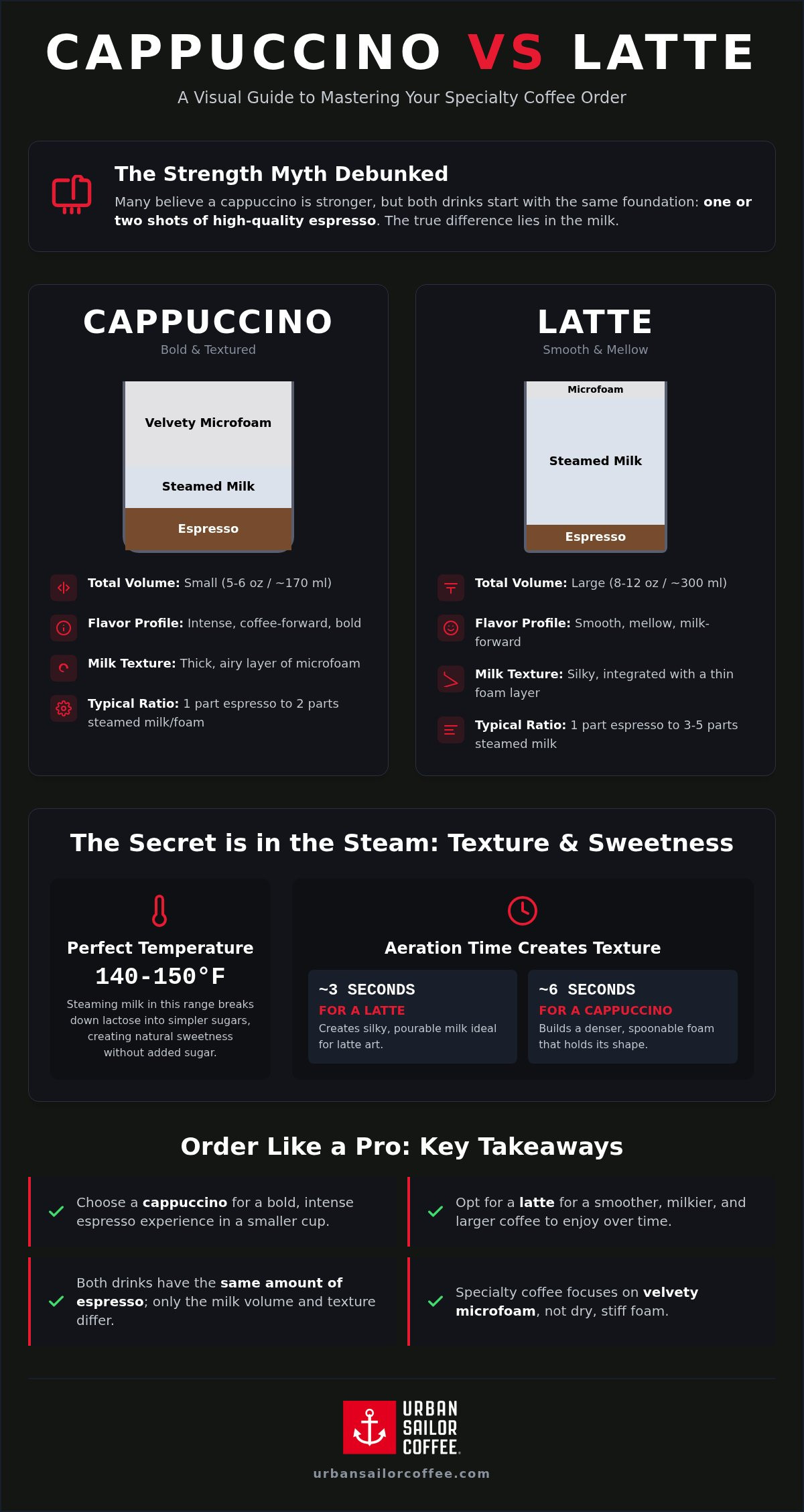
Many drinkers fall for the 'strength myth,' believing a cappuccino packs a bigger caffeine punch. In reality, both drinks typically start with the same foundation, usually one or two shots of espresso. The difference you taste comes entirely from the milk to coffee ratio. If you want to taste the nuanced notes of a specialty bean like our Jordbaer Blend, the volume of milk matters more than the number of shots. More milk means a more diluted flavor profile.
Traditional Italian definitions once dictated strict 1:1:1 ratios of coffee, milk, and foam. However, "Third Wave" coffee standards have evolved. Modern baristas focus on microfoam integration rather than stiff peaks of dry foam. This shift ensures every sip is a cohesive journey rather than a struggle through a cloud of bubbles. It turns a simple beverage into a craft experience.
What Exactly is a Latte?
The "Caffè e Latte" began as a simple home-style breakfast drink in Europe before exploding into American culture. It's designed for those who want a smooth, approachable coffee experience that lasts more than a few sips. A standard specialty latte usually lands between 8 and 12 ounces. Because of this larger volume of steamed milk, the espresso flavor is softened. This makes it the perfect canvas for subtle sweetness or intricate latte art. It’s the ultimate companion for a slow morning or a long drive.
What Exactly is a Cappuccino?
History suggests the drink earned its name from the Capuchin friars, whose brown robes matched the color of espresso mixed with milk. A traditional cappuccino is significantly smaller than a latte, typically served in a 5 or 6-ounce cup. This smaller size creates an intense, coffee-forward profile. You get more punch from the espresso because there is less milk to hide behind. It’s a bold choice for the purist who wants a rich, textured mouthfeel without losing the character of the roast.
The Anatomy of Ratios: Microfoam, Steam, and Specialty Standards
Forget the old-school rule of thumb that says a cappuccino must be one-third foam, one-third milk, and one-third espresso. In the specialty world, we've moved toward integrated pouring. Instead of scooping stiff, dry foam onto a cup like a cloud, baristas now aim for microfoam. This is the secret to that velvet mouthfeel you find at top-tier shops. It’s a liquid silk texture created by injecting just enough air to create tiny, invisible bubbles. When you compare the cappuccino vs latte, the primary shift is how much air we push into that milk. While a latte is smooth and integrated, the cappuccino demands a specific type of aeration to hold its structure.
Salt Lake City coffee culture is leaning heavily into "wet" cappuccinos. While a "dry" drink has mostly airy foam, a wet pour integrates the milk and espresso more tightly. This creates a more consistent flavor from the first sip to the last. You can spot the difference immediately. A latte usually features intricate art, while a classic cappuccino often sports a "monk's head," which is a dark ring of crema around a white center. Beyond the aesthetics, there are clear nutritional differences between a latte and cappuccino based on the total milk volume used in the recipe.
The Latte Ratio: Volume and Dilution
A latte is built for longevity. The standard ratio is one part espresso to three or five parts steamed milk. This high volume of milk dilutes the espresso, making it the most approachable drink on the menu. You'll usually find just a thin layer of microfoam, about one centimeter, resting on top. It’s the ideal choice if you want to add flavors or if you're settling in for a long session at the shop. If you’re brewing at home, try using our Jordbaer Blend to ensure the coffee character still shines through all that milk.
The Cappuccino Ratio: Aeration and Intensity
Intensity is the name of the game here. While the traditional 1:1:1 ratio is still cited, specialty standards often lean toward one part espresso to two parts heavily aerated microfoam. This creates a much smaller, 5 or 6-ounce beverage. Because there’s less milk to mask the beans, you’ll taste every nuance of the roast. It’s a shorter journey but a much more impactful one. Purists prefer this because it celebrates the craft of the roaster and the skill of the barista in one punchy cup. Understanding the technical breakdown of a cappuccino vs latte helps you navigate any specialty menu with ease.
Strength vs. Smoothness: Which Drink Matches Your Palate?
Your palate dictates your pour. When deciding between a cappuccino vs latte, you're choosing how much of the coffee's raw character you want to experience. Milk acts as a filter. In a latte, the high volume of steamed milk masks the more aggressive notes of the espresso, creating a smooth, uniform profile. If you prefer a bolder, more textured experience where the coffee remains the star, the cappuccino is your best bet. It’s a balance of intensity and aeration that doesn't hide the bean's origin.
Sweetness isn't just about adding sugar. When a barista steams milk to the specialty standard of 140-150°F, a chemical transformation occurs. This temperature range breaks down long-chain lactose into simpler, sweeter sugars. It’s essentially natural caramelization. Because a latte contains more milk, it naturally tastes sweeter and creamier than a cappuccino. The mouthfeel also differs significantly. A cappuccino offers a structured, airy foam that sits high on the palate, while a latte provides a silky, liquid texture that coats the tongue evenly.
Timing matters for your choice. A cappuccino is the classic morning kickstart, designed for a quick, impactful hit of flavor. The latte is the ultimate afternoon sipping drink, perfect for when you want to settle in and enjoy a longer, more relaxed beverage experience. It’s about matching the drink to the rhythm of your day.
The Role of the Espresso Bean
The beans you choose define the final cup. Lighter roasts are often delicate and floral, meaning they easily get lost in a large, milky latte. To truly appreciate these nuances, you need the tighter ratio of a cappuccino. Selecting the right espresso beans is foundational to this balance. Our Jordbaer Blend is specifically roasted to provide a berry-like acidity. This bright profile cuts through the milk rather than being buried by it, ensuring your drink has a distinct, vibrant personality even in a milk-heavy pour.
Customization: Syrups, Milks, and Alternatives
Lattes serve as the perfect canvas for seasonal exploration. Whether it's a hint of lavender or a classic vanilla, the higher milk volume carries these flavors beautifully. If you're looking at milk alternatives, oat milk has become the industry favorite for its ability to produce high-quality microfoam that rivals dairy. It adds a toasted, nutty depth that pairs well with both drinks. If you find yourself caught in the middle of the cappuccino vs latte debate, consider the Flat White. It offers the smaller size of a cappuccino but with the silky, thin microfoam of a latte, bridging the gap between intensity and smoothness.
Home Barista Techniques: Crafting the Perfect Pour
Mastering the craft at home turns a daily routine into a shared discovery. The technical difference between a cappuccino vs latte happens at the steam wand. It starts with dialing in your espresso shot. This foundation must be rich, syrupy, and consistent. If your espresso is sour or watery, no amount of perfect milk can save the drink. Aim for a 25 to 30 second extraction time to pull the best flavors from your beans. This ensures a balanced base that can stand up to the milk you're about to add.
Once your shot is ready, master the steam wand. For a latte, aerate the milk for only 3 seconds. You want just enough air to create a silky microfoam that integrates easily. For a cappuccino, stretch that aeration to 6 or 8 seconds. This extra time creates the structured, airy texture that defines the drink. Listen for a "paper tearing" sound. That is the sound of air integrating into the milk proteins to create that velvet mouthfeel.
Grooming is the next vital step. Tap your pitcher on the counter to pop any large bubbles. Swirl the milk vigorously until the surface looks like glossy, wet paint. This ensures the foam and liquid stay integrated during the pour. Finally, execute the pour. Start with the pitcher high and pour slowly to pierce the crema. As the cup fills, bring the pitcher low and increase your speed to lay your microfoam on the surface for art. This high-to-low transition is what separates a professional pour from a messy one.
Equipment Essentials for the SLC Home Barista
Your gear matters. A dedicated espresso machine with a high-pressure boiler beats a "steam toy" or moka pot every time. You need consistent pressure to create true microfoam. Freshness is your other secret weapon. Salt Lake City has an incredible scene, and choosing local coffee roasters ensures your beans haven't spent months on a retail shelf. Crema is the byproduct of CO2 in fresh beans. Using a coffee bean subscription keeps your supply consistent and your roast dates optimal. Ready to upgrade your morning? Grab a bag of our Jordbaer Blend to start your home barista journey with the right foundation.
Troubleshooting Your Foam
Even pros have off days. If your foam isn't cooperating, look for these three common errors:
- The "Sea Foam" Error: Large, soapy bubbles mean you aerated too aggressively or didn't swirl enough. Tap the pitcher harder and swirl longer.
- The "Scorched" Error: If the milk tastes flat or smells like burnt sugar, it got too hot. Stop steaming when the pitcher is just too hot to touch, around 150°F.
- The "Flat Latte" Error: If there is no separation between coffee and milk, you didn't aerate enough. Add another second of air next time to build structure.
The Urban Sailor Experience: Elevating Your Daily Adventure
At Urban Sailor Coffee®, we view every order as a shared discovery. We don't just serve drinks; we invite you into the craft. When you're caught between the choice of a cappuccino vs latte, our baristas act as your guides. We love explaining how the aeration of the milk changes the way you taste the espresso. This interaction is the heart of our hospitality. It turns a simple caffeine stop into a moment of connection and learning. We believe you should know exactly what's in your cup and why it tastes the way it does.
Our signature recommendation for any milk-based drink is our Jordbaer Blend. We small-batch roast this blend in Utah to achieve high-clarity espresso with distinct berry-like acidity. It’s the ideal foundation for a balanced latte because the flavor profile is bold enough to cut through the milk without being overwhelmed. In a cappuccino, the Jordbaer Blend shines even brighter. It offers a vibrant, punchy experience that rewards the curious palate. We take pride in the meticulous nature of our production, ensuring every bag supports your personal coffee adventure.
Specialty Coffee on the Move
The spirit of mobility defines our identity. We started with a nomadic service model, and we continue to bring that energy to events across the region. Guests at a wedding or corporate gathering shouldn't have to settle for sub-par coffee. Our mobile coffee catering service brings a full specialty bar to Salt Lake City and Park City. We provide the same professional barista expertise and high-quality milk texture you expect from a brick-and-mortar shop. Whether your guests want a classic, airy cappuccino or a silky latte, we deliver quality without compromise. Booking Urban Sailor Coffee® for your next gathering means bringing a piece of Utah’s craft coffee culture directly to your venue.
Join the Journey
Our story is a continuous narrative of growth and exploration. From our unconventional beginnings to our community-rooted presence today, we remain focused on the stories behind the products we create. You can bring this experience into your own kitchen by signing up for our coffee bean subscriptions. We deliver our fresh roasts directly to your door, ensuring you always have the perfect beans for your home barista practice. Mastering the cappuccino vs latte is a process of experimentation. There's no "wrong" choice, only the next discovery. We invite you to grab your favorite mug, try a new ratio, and join us on this ongoing journey.
Master Your Next Coffee Discovery
You now have the technical tools to navigate any specialty menu with total confidence. Whether you reach for the bold, aerated structure of a cappuccino or the smooth, lingering silkiness of a latte, the secret always lies in the intentional balance of the pour. The cappuccino vs latte choice is ultimately a personal map of your own palate. It’s about deciding how much you want to celebrate the raw character of the espresso versus the caramelized sweetness of perfectly steamed milk.
We believe great coffee is a journey best shared. Our specialty-grade Jordbaer Blend, small-batch roasted right here in Utah, provides the high-clarity foundation needed for both of these craft classics. If you’re planning a gathering in Salt Lake or Park City, we can bring this entire experience to your doorstep. Our professional mobile barista service ensures your guests enjoy the same meticulous quality found in the finest shops. Elevate your next event with Urban Sailor Coffee® Catering and let us handle the craft. Keep exploring your favorite ratios and enjoy every sip of the adventure.
Frequently Asked Questions
Is a cappuccino stronger than a latte?
A cappuccino is not technically stronger than a latte because both typically contain one or two shots of espresso. The perceived strength comes from the ratio of milk to coffee. In a cappuccino, there is less milk to dilute the espresso, allowing the bold notes of our Jordbaer Blend to shine through. If you prefer a drink where the coffee flavor is more prominent, the cappuccino is the right choice for your adventurous palate.
Which has more calories, a latte or a cappuccino?
A latte generally contains more calories than a cappuccino because it uses a significantly larger volume of milk. While a specialty cappuccino is usually 5 or 6 ounces, a latte often ranges from 8 to 12 ounces. Since milk is the primary source of calories in these espresso drinks, the larger size of the latte results in a higher caloric count. Choosing a smaller cup size or a plant-based alternative can help you manage these daily totals.
Can I make a cappuccino with a regular coffee maker?
You cannot make a true cappuccino with a standard drip coffee maker because it lacks the pressure required to create authentic espresso and microfoam. A real cappuccino requires a concentrated espresso shot and aerated milk. However, you can simulate the experience at home using a moka pot for strong coffee and a handheld frother for the milk. For the best results in Salt Lake City, use fresh beans from our subscription to ensure optimal flavor.
What is the best milk for latte art?
Whole milk is widely considered the best choice for latte art due to its high fat and protein content, which creates stable microfoam. The proteins allow the milk to stretch, while the fats provide a glossy finish. For those seeking plant-based options in Park City, barista-edition oat milk is a fantastic alternative. It mimics the texture of dairy remarkably well, allowing our mobile baristas to pour intricate designs at every private event we cater.
Why is my cappuccino foam so dry and stiff?
Dry and stiff foam usually happens when you introduce too much air into the milk during the beginning of the steaming process. If you aerate for too long, you create large, soapy bubbles instead of silky microfoam. To fix this, keep your steam wand just below the surface for only 6 to 8 seconds. This technique ensures a velvet mouthfeel that integrates perfectly with the espresso rather than sitting on top like a stiff, unappealing meringue.
What is a "wet" cappuccino vs. a "dry" cappuccino?
A "wet" cappuccino contains more steamed milk and integrated microfoam, making it similar to a small latte but with a bolder coffee punch. A "dry" cappuccino features more airy, thick foam and less liquid milk, resulting in a lighter mouthfeel and more intense espresso flavor. Most specialty shops in Salt Lake City now lean toward the wet style. This preference ensures a more cohesive drink where the espresso and milk are better integrated from start to finish.
How much caffeine is in a standard latte?
A standard latte typically contains about 63 to 126 milligrams of caffeine, depending on whether the barista pulls a single or double shot of espresso. Most specialty shops in the region default to a double shot for better flavor balance. This caffeine level is identical to what you would find in a cappuccino of the same shot count. The primary difference between a cappuccino vs latte is the texture and volume of the milk, not the energy boost.
Does a latte have more milk than a cappuccino?
Yes, a latte contains significantly more milk than a cappuccino. A standard specialty latte uses a ratio of roughly one part espresso to three or five parts steamed milk, filling an 8 to 12-ounce cup. In contrast, a cappuccino uses less milk and more air, usually served in a 5 or 6-ounce cup. This extra milk volume is why lattes are known for their smooth, creamy profile and why they serve as a great canvas for flavors.