


What if the most flavorful cup of coffee you brew this week didn't have a single milligram of caffeine? For years, decaf coffee has been the industry's punching bag, dismissed as a watery, bitter disappointment that only exists for people who can't handle the "real" stuff. We get it. If you've ever choked down a cup of oily, chemical-tasting decaf from a grocery store shelf, you probably decided that "unleaded" just isn't worth the effort.
You deserve better than a compromise. We're here to prove that decaf can actually taste like specialty coffee, provided it's handled with the same artisanal integrity as any other small-batch bean. In this guide, we'll uncover the truth about how decaf is actually made, from the FDA's current review of methylene chloride to the chemical-free methods that preserve every complex note. You'll learn how to find fresh roasts right here in Salt Lake City and Park City, and we'll show you exactly how to brew decaf at home for a rich, bold finish. It's time to leave the myths behind and start your next adventure with a cup that tastes as good as it feels.
Key Takeaways
- Reclaim the craft by learning how specialty roasting has transformed decaf from a watery byproduct into a high-precision beverage.
- Navigate the science of decaffeination to choose clean, chemical-free processes that preserve the delicate flavor oils of the green bean.
- Uncover the truth about caffeine levels and why the industry standard for decaf coffee still leaves room for trace amounts of energy.
- Adjust your home barista routine with specific tips for handling the unique, brittle structure of decaffeinated beans to prevent bitter over-extraction.
- Explore how small-batch roasting in Salt Lake City ensures your "unleaded" beans stay fresh and pass the toughest blind taste tests.
The 'Death Before Decaf' Fallacy: Why Decaf Got a Bad Reputation
You've seen the stickers on laptop cases and the slogans on t-shirts: "Death Before Decaf." It's a battle cry for the caffeine-obsessed, but it's also a symptom of a broken industry. For decades, decaf was treated as a second-class citizen. Roasters used the lowest-grade commodity beans for their decaf lines, assuming that the decaffeination process would strip away any potential for flavor anyway. It became a self-fulfilling prophecy. When you start with poor-quality green coffee, you end up with a cup that tastes like cardboard and disappointment.
This commodity mindset created a deep psychological barrier. We started associating the caffeine kick with the craft itself. If the coffee didn't make your heart race, we assumed it wasn't "real" coffee. The 2026 specialty scene has finally flipped this script. We now treat decaf coffee as a high-precision craft. By looking back at the history and methods of decaffeination, we can see how the industry moved from industrial solvents to artisanal techniques that respect the bean's origin.
Myth #1: Decaf is Made with Dangerous Chemicals
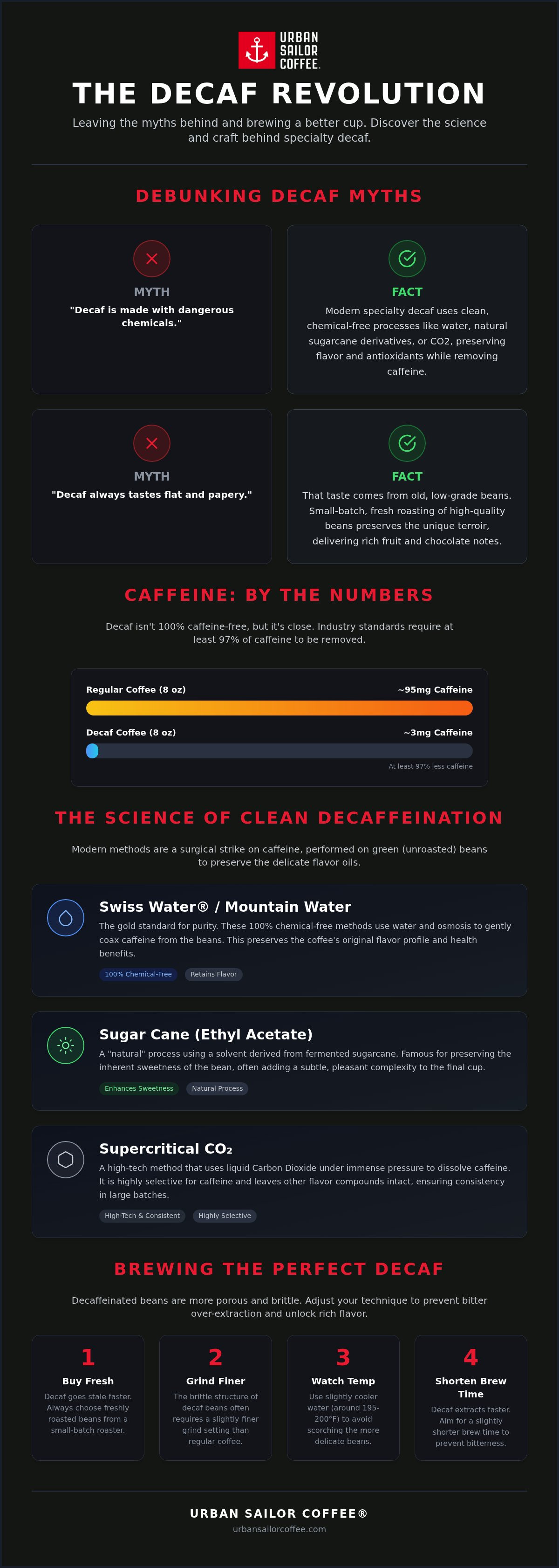
The fear of "chemical coffee" is the biggest hurdle for many drinkers. Historically, solvents like methylene chloride were the standard. While the FDA is currently reviewing a petition to ban methylene chloride as of 2026, the specialty world has already pivoted. Modern "clean" processes use natural elements like water, carbon, or ethyl acetate derived from sugarcane. These methods target the caffeine molecules specifically, leaving the flavor precursors and antioxidants intact. Specialty decaf is coffee that scores above 80 points even after processing, proving that safety and quality now go hand-in-hand.
Myth #2: Decaf Always Tastes Like Cardboard
That flat, papery taste isn't an inherent trait of decaffeinated beans; it's a sign of old coffee or bad roasting. Because decaf beans are more porous, they lose their freshness much faster than regular beans. Large commercial roasters often over-roast these beans to a dark, oily finish to mask the stale flavors. We take a different path. Our small-batch roasting process in Salt Lake City and Park City ensures that we can monitor the heat with surgical precision. This preserves the terroir, the unique flavors of the soil and climate where the bean grew. When you roast in small quantities, you capture the vibrant fruit and chocolate notes that make specialty coffee worth drinking. Freshness is the secret weapon for decaf coffee.
Water, Solvents, and CO2: The Science of Clean Decaffeination
Decaffeination is a surgical strike on the green bean. It happens long before the beans ever hit the roaster. The goal is to remove caffeine while leaving the volatile flavor oils untouched. This process is a delicate dance. If you pull too hard, you lose the soul of the coffee. This extra step adds to the production cost. High-quality decaf coffee is a premium product that requires meticulous handling and specific expertise. Organic certifications play a huge role here. They ensure that the "clean" label isn't just marketing, but a verified standard of production that protects both the consumer and the environment.
The Swiss Water and Mountain Water Processes
Specialty roasters often look to the Swiss Water and Mountain Water processes as the industry gold standard. These methods are 100% chemical-free. They rely on the principle of osmosis. Green beans soak in a solution where the caffeine level is low but the flavor solids are high. The caffeine naturally migrates out of the bean to find balance. Because no harsh solvents touch the coffee, the health benefits of decaf remain identical to regular coffee. This process alters the bean’s cellular structure. It makes the beans more porous and brittle. It requires a roaster who knows how to adjust heat levels to prevent the beans from drying out too fast during the roast cycle.
Sugar Cane (EA) and CO2 Methods
The Sugar Cane process, or Ethyl Acetate (EA), is a "natural" method using a solvent derived from fermented sugarcane. It's a favorite in regions like Colombia. EA is famous for preserving the inherent sweetness of the bean. It often adds a subtle, sugary complexity to the final cup that complements the coffee's natural acidity. On the high-tech side, Carbon Dioxide (CO2) extraction uses liquid CO2 under immense pressure to dissolve caffeine. While CO2 is great for consistency in large batches, craft roasters often prefer EA for its superior flavor clarity and lower environmental footprint. Both methods represent a massive leap forward from the industrial solvents of the past.
We prioritize these clean methods because your post-adventure brew should be as pure as the mountain air. If you're ready to taste the difference that clean processing makes, check out our coffee bean subscriptions and find a decaf that actually satisfies. As of 2026, market trends show a massive shift toward these chemical-free methods. Drinkers now demand transparency and taste in every bag, refusing to settle for the chemical aftertaste of previous generations.
Myth: Decaf is 100% Caffeine-Free (and Other Flavor Lies)
If you're looking for an absolute zero, you won't find it in a coffee bean. The term "decaffeinated" is a bit of a misnomer that leads to plenty of confusion at the brew bar. Most drinkers assume that the process strips every single molecule of caffeine away, but it's actually a science of percentages. Don't let the "unleaded" nickname fool you. There's almost always a trace amount of caffeine left behind, and for most specialty drinkers, that's actually a good thing for the final flavor profile.
There's also a persistent lie that decaf coffee is "weaker" or less "real" than its caffeinated counterparts. This misconception usually stems from poor brewing habits or low-quality beans rather than the decaffeination process itself. When you use high-end beans and the right technique, the lack of a massive caffeine jolt doesn't mean a lack of body or intensity. It's time to stop treating decaf like a watered-down substitute and start respecting it as a unique expression of the craft.
Understanding the 3% Residual Caffeine
In the United States, the National Coffee Association notes that the industry standard for decaffeination requires the removal of at least 97% of the original caffeine content. If you're drinking a cup processed with the Swiss Water method, that number climbs to 99.9%. To put that in perspective, a standard cup of decaf coffee contains about 2 to 5 milligrams of caffeine. Compare that to a bar of dark chocolate, which can pack around 20 milligrams, or a cup of black tea that sits near 47 milligrams. For most people, these trace amounts are negligible, but they actually help maintain some of the bean's natural bitterness and structural complexity. If you have extreme sensitivity, sticking to 99.9% chemical-free processes is your best bet for a restful night.
Flavor Profiles: What to Expect from a High-End Decaf
The decaffeination process slightly alters the sugars within the green bean. This shift often pushes the flavor profile toward malty, chocolatey, or nutty notes. You'll rarely find a decaf that mimics the searing, citrusy acidity of a light-roast Kenyan regular, because the processing tends to mellow those sharp edges. However, you can absolutely find "fruity" decafs if the roaster starts with high-scoring Ethiopian or Colombian beans. The challenge lies in the roast. Because decaf beans are more porous, they react to heat faster. You can learn more about how roast levels impact these delicate sugars in our guide on Specialty Coffee Roasting: From Bean to Your Cup. When handled with care, a specialty decaf offers a deep, honey-like sweetness that's perfect for a slow morning or a post-hike reward.
Brewing the Perfect Unleaded Cup: Tips for the Home Barista
Brewing decaf coffee isn't a guessing game; it's a recalibration. The decaffeination process, whether it uses water or CO2, physically breaks down the bean's cellular walls. This leaves the beans more brittle and porous than their caffeinated siblings. When you toss these beans into a grinder, they don't just crack; they shatter. This creates a high volume of "fines," which are tiny dust-like particles that can wreak havoc on your morning ritual.
You might notice a strange paradox during a pour-over: the water seems to rush through at first, only to stall completely halfway through the brew. This "Fast Flow" problem happens because those extra fines migrate to the bottom of your filter, creating a muddy barrier that blocks the water. To fix this, you need to adjust your variables with the same precision we use in our small-batch roasting. Dialing in your pour over coffee ratio is the first step to ensuring your cup doesn't turn into a bitter mess. If you treat decaf exactly like a standard light roast, you'll likely end up with an over-extracted, muddy brew that hides the bean's natural sweetness.
Grind Size and Water Temperature Adjustments
Start by coarsening your grind. If you usually brew at a medium-fine setting, click your grinder two or three notches toward coarse. This helps minimize the impact of the fines and keeps the water moving. You should also consider dropping your water temperature. While a light-roast regular bean might thrive at 205°F, decaf coffee often tastes better when brewed between 195°F and 200°F. Decaf beans reach peak extraction faster than regular beans because their pre-processed structure allows water to penetrate and pull flavor almost instantly. Lowering the heat prevents you from pulling out those harsh, ashy notes that give decaf a bad name.
Storage and Freshness: The Decaf Clock
The decaf clock ticks faster than you think. Because the beans are more porous, they have a higher surface area exposed to oxygen. This means they go stale and lose their vibrant oils much quicker than standard coffee. Buying in bulk is the enemy of a great decaf experience. Instead, opt for small-batch purchases that you can finish within two weeks of the roast date. Store your beans in an airtight, opaque container away from the Utah sun. Keeping your beans fresh is the only way to preserve the adventurous flavor profiles we work so hard to roast into every batch. If you want to ensure you always have the freshest "unleaded" beans on hand, explore our coffee bean subscriptions and let us handle the timing for you.
Specialty Decaf in Salt Lake City: The Urban Sailor Difference
Urban Sailor Coffee® isn't just about the caffeine kick; it's about the craft. In Salt Lake City and Park City, we've seen a massive shift in how people approach their morning ritual. Drinkers want the complex flavor of a high-altitude roast without the late-day jitters. We select our decaf coffee beans through rigorous blind taste tests. If a bean doesn't stand up against our best caffeinated single-origins, it doesn't make the cut. Our small-batch roasting process is critical here. Since decaf beans age faster, roasting in tiny quantities ensures that SLC locals get a bag that’s vibrant and full of life, not flat or stale.
We've taken this commitment to quality on the road. Our mobile coffee catering has served thousands of cups across the Wasatch Front. We’ve watched skeptics try our "unleaded" espresso and do a double-take. That professional barista standard is what we package for your kitchen. You can even make it a permanent part of your routine with a coffee bean subscription, ensuring you never run out of adventure. We believe that every bean tells a story, and the lack of caffeine shouldn't make that story any less compelling.
Roasting for the Salt Lake Explorer
Salt Lake City is a city of constant movement. Whether you’re heading up Big Cottonwood Canyon or hitting the trails in Park City, you need a brew that fits your pace. Decaf is the ultimate pre-hike beverage for those who want steady energy and hydration without the caffeine crash. We prioritize clean processing methods like Swiss Water and Mountain Water. These chemical-free paths align with our rugged freedom vibe. We want you to feel as good about the process as you do about the flavor. Our roast profiles are designed to highlight the bean's natural heritage, giving you a cup that tastes like the high-altitude landscapes we call home.
From Mobile Bar to Your Kitchen
Our journey started as a nomadic service model on a motorcycle sidecar. That mobile bar was our primary laboratory. Every event gave us a direct feedback loop from real people in our community. Our catering guests helped us perfect our decaf roast by telling us exactly what they missed in other "unleaded" options. We listened. We refined. Now, Urban Sailor Coffee® is inviting the whole community to rediscover decaf. It’s no longer a compromise or a second-tier choice. It’s a shared discovery. Join us in breaking the old myths. Grab a bag, fire up your brewer, and experience a decaf that finally lives up to the specialty name.
Reclaim Your Afternoon Ritual
The "Death Before Decaf" era is officially over. You've seen how specialty decaf coffee has evolved from a commodity afterthought into a high-precision craft that respects the bean's origin. By choosing chemical-free processing methods and adjusting your home brewing variables, you can enjoy a cup that rivals any caffeinated blend in complexity and sweetness. Quality no longer requires a caffeine jolt.
At Urban Sailor Coffee®, we bring this artisanal integrity to every batch. Our beans are small-batch roasted right here in Utah to ensure peak freshness, using only 100% chemical-free processing options that preserve the story behind every bean. It's the same quality trusted by SLC's top event planners for our mobile catering. Whether you're gearing up for a sunrise hike or winding down after a long day, you shouldn't have to compromise on taste. It's time to rediscover what "unleaded" can actually be.
Explore our specialty decaf and start your next adventure today. Keep exploring, stay bold, and enjoy the journey one sip at a time.
Frequently Asked Questions
Is decaf coffee actually 100% caffeine-free?
No, decaf coffee is rarely 100% caffeine-free. The industry standard in the United States requires the removal of at least 97% of the caffeine, while chemical-free methods like the Swiss Water Process typically reach 99.9% purity. A standard cup usually contains between 2 and 5 milligrams of caffeine. This trace amount is negligible for most people, but it is enough to help maintain the bean's structural complexity and natural flavor profile without the heavy stimulant effect.
What is the healthiest way to decaffeinate coffee?
The healthiest methods are chemical-free processes like the Swiss Water or Mountain Water methods. These techniques use only water, temperature, and osmosis to extract caffeine rather than synthetic solvents like methylene chloride. By avoiding harsh chemicals, you ensure the final cup remains pure and untainted. We prefer these methods for our small-batch roasts in Salt Lake City because they protect the bean's antioxidants and natural health benefits while keeping the flavor profile clean and crisp.
Why does decaf coffee often taste different than regular coffee?
Decaf often tastes different because the decaffeination process slightly alters the bean's sugar structure. This often results in a milder acidity and more pronounced chocolate or nutty notes. Many commercial brands over-roast decaf to hide the flavor loss from low-quality processing. However, when we use high-scoring specialty beans and small-batch roasting, the difference becomes almost indistinguishable. Freshness is the biggest factor in making decaf taste like a regular specialty cup without the bitter aftertaste.
Can I get a decaf coffee subscription in Salt Lake City?
Yes, you can easily set up a decaf coffee subscription through Urban Sailor Coffee®. We specialize in providing Salt Lake City and Park City locals with fresh, small-batch roasted beans delivered right to their door. Our subscription model allows you to customize your delivery schedule so you never run out of adventure. It’s the best way to ensure your decaf stays fresh, as decaffeinated beans lose their vibrant flavor faster than regular beans once they are roasted.
Is decaf coffee more acidic than regular coffee?
No, decaf coffee is generally less acidic than regular coffee. The decaffeination process often removes some of the organic acids along with the caffeine, resulting in a smoother and mellower cup. This makes it a great choice for drinkers with sensitive stomachs who still want to enjoy the ritual of a morning brew. If you prefer a brighter cup, look for decafs processed with the Ethyl Acetate method, which tends to preserve more of the bean's natural sweetness and acidity.
How long do decaf coffee beans stay fresh compared to regular beans?
Decaf beans have a shorter shelf life because the decaffeination process makes them more porous. This increased surface area allows oxygen to penetrate the bean faster, leading to quicker oxidation and staling. While regular beans might stay peak-fresh for three to four weeks, we recommend finishing your decaf within two weeks of the roast date. Our small-batch roasting in Utah ensures you receive the beans at their absolute peak so you can enjoy them before the flavors fade.
What is the Swiss Water Process and why is it better?
The Swiss Water Process is a 100% chemical-free decaffeination method that uses Green Coffee Extract and carbon filtration to remove caffeine. It is considered superior by specialty roasters because it removes 99.9% of caffeine without stripping away the volatile flavor oils. This process respects the bean's origin and terroir. It allows us to offer a decaf that actually tastes like the high-quality coffee it was before the caffeine was removed, ensuring a premium experience in every cup.
Can you make espresso with decaf beans?
Absolutely. You can make incredible espresso with decaf beans, though it requires a few adjustments to your routine. Because decaf beans are more brittle, they produce more tiny particles called "fines" when ground, which can clog your espresso basket. You will need to grind slightly coarser and perhaps lower your brew temperature slightly to avoid over-extraction. Our mobile coffee catering team uses decaf for espresso daily in Salt Lake City, proving that "unleaded" shots can have thick crema.