


Most coffee drinkers spend their mornings choking down a cup of bitter, burnt liquid just to wake up, but your daily ritual shouldn't feel like a chore. As of July 2026, 47% of American adults have made the switch to specialty brews, yet many still feel overwhelmed by the jargon. If you are tired of industrial anonymity, you are ready for a change. It is easy to feel disappointed when a bag of beans tastes like charcoal instead of the vibrant notes promised on the label. You want a brew that fuels your next adventure, not one that leaves a bad taste in your mouth.
In this guide, you will discover the meticulous world of artisan coffee. We are diving into the science of small-batch roasting and sharing the secrets to finding the best craft brews in Salt Lake City. You will learn exactly how to spot high-quality beans and why the altitude and process matter as much as the pour. We are moving past the confusion to find a local SLC roaster that treats coffee as a craft, not just a commodity. Get ready to transform your morning cup into a journey of flavor.
Key Takeaways
- Discover why artisan coffee depends on small-batch roasting and precise heat curves to unlock complex flavors that mass-market brands simply can't match.
- Move beyond bitter, burnt beans by learning the difference between anonymous commodity sourcing and the transparent, direct-trade practices of specialty roasters.
- Master the buyer’s checklist to identify high-quality beans using specific markers like roast dates, farm origins, and altitude details.
- Explore the vibrant Salt Lake City coffee scene and find out how local experts are crafting unique profiles like the adventurous Jordbaer Blend.
- Streamline your path to better brewing with bean subscriptions that bring fresh, small-batch roasts from the mountains straight to your kitchen.
Defining Artisan Coffee: More Than Just a Marketing Label
The term "artisan" is frequently hijacked by corporate marketing departments. They use it to sell everything from mass-produced bread to fast-food wraps, hoping to borrow a sense of prestige. In the coffee world, however, the word carries a specific and significant weight. Real artisan coffee isn't just a label to justify a premium price; it is a fundamental commitment to the roasting process. It represents a total rejection of industrial anonymity. Instead of beans disappearing into a faceless factory, a dedicated roaster oversees every single stage of production. This hands-on involvement ensures that the unique soul of the bean isn't sacrificed for the sake of massive, automated volume.
The Artisan vs. Specialty Coffee Distinction
It's a common mistake to use these terms interchangeably, but they actually describe different parts of the coffee journey. Specialty coffee is a technical classification. It refers specifically to green beans that earn a quality score of 80 points or higher on a 100-point scale. It focuses on the raw material and the agricultural excellence of the farm. In contrast, artisan refers to the craft and the specific method used by the roaster to transform those beans. You can have the highest-rated specialty beans in the world, but they can still be ruined by poor, uninspired roasting. True Third-wave coffee culture thrives only when these two elements meet in perfect harmony. At Urban Sailor Coffee®, we combine meticulous specialty-grade selection with a hands-on roasting approach to ensure every bag of our Jordbaer Blend reaches its full potential.
The Philosophy of the Craft
The philosophy behind this craft is built on rugged independence and a spirit of adventure. We don't view ourselves as mere manufacturers; we see the roaster as a guide who leads you through complex flavor landscapes. This is a complete shift away from the "commodity" mindset where coffee is treated as nothing more than a caffeine delivery system. We prioritize transparency and traceability from the farm level all the way to our SLC roastery. This ensures you know exactly where your beans came from and who helped them get there. Our roots are nomadic, starting with a mobile service model that prioritized movement and discovery. That spirit still influences how we find and develop flavors today, keeping us in a state of constant motion.
We don't rely on automated industrial algorithms to decide when a roast is finished. We use our senses. We listen for the "first crack" and watch the color change in real time to capture the perfect moment. This human intuition is what separates artisan coffee from a mass-produced product. Large corporate chains try to mimic this feeling, but they simply can't replicate the soul of small-batch production. Their machines are programmed for speed and volume, often resulting in a burnt, uniform taste that hides the bean's true character. When you choose a craft roaster, you're supporting a story of heritage and exploration. Every cup becomes a shared discovery between the producer and the drinker, turning a daily habit into a journey.
The Artisan Roasting Process: Small Batches, Big Science
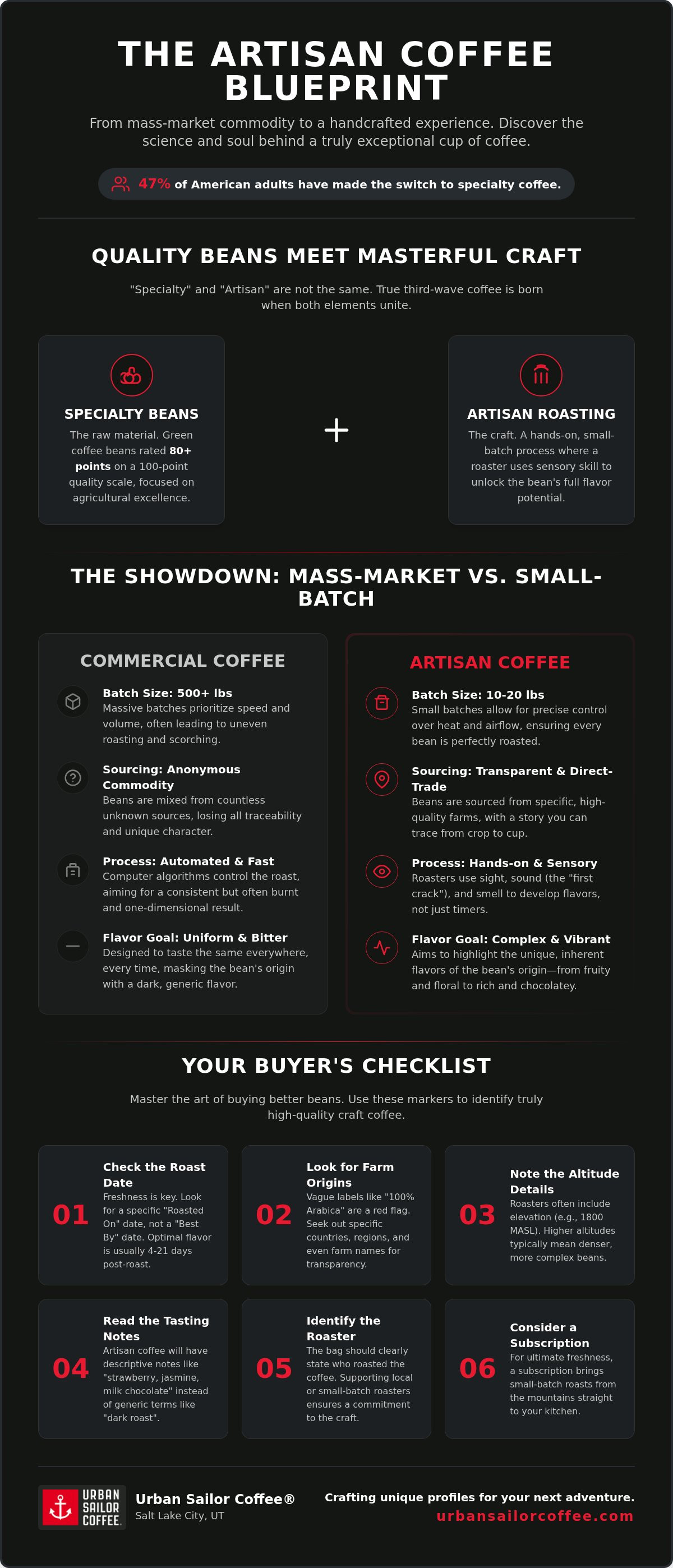
Industrial coffee production is a game of massive volume and automated speed. Large commercial roasters often process 500 pounds of beans in a single cycle, prioritizing consistency over character. In contrast, artisan coffee is born in batches of just 10 to 20 pounds. This smaller scale gives the roaster total control over the environment inside the drum. We don't just "set it and forget it." We actively manipulate heat curves and airflow to highlight the unique potential of every harvest. By roasting in small increments, we ensure that every bean receives the exact amount of energy needed to develop its full flavor profile without scorching.
Mastering the variables of drum speed and air pressure is where the science meets the craft. Too much airflow can strip away delicate aromatics, while too little can lead to a smoky, acrid taste. We track these data points in real time, but we also rely on the physical connection to the machine. This precision allows us to create repeatable roast profiles that honor the hard work of the farmers who grew the beans. Freshness is the final, non-negotiable pillar. Because we roast in such small quantities, our beans spend less time sitting in a warehouse and more time delivering peak flavor to your cup.
The Science of the Bean: Maillard and Caramelization
Heat acts as a catalyst for a complex chemical dance inside the roaster. The Maillard reaction in coffee roasting is a chemical interaction between amino acids and reducing sugars that creates the brown color and the foundational savory flavors of the brew. As the temperature continues to climb, caramelization begins. This process breaks down complex carbohydrates into simpler sugars, adding layers of sweetness and body. Artisan roasters hunt for the "sweet spot" where these reactions are perfectly balanced. We pull the beans at the precise second where sweetness peaks before the heat turns those sugars into carbon.
The Roaster’s Intuition
While software provides a roadmap, a roaster's senses provide the navigation. We listen for the "first crack," an audible popping sound that signals the bean's cellular structure is expanding and releasing moisture. It's a high-stakes moment that requires absolute focus. We also watch for subtle shifts in color and smell for the transition from a grassy, hay-like aroma to the rich, toasted scent of finished coffee. As industry leaders at Perfect Daily Grind often point out, this sensory mastery is what separates a technician from a true artisan.
Location matters just as much as the equipment. Roasting in Salt Lake City presents unique challenges due to our high altitude and low humidity. Water boils at a lower temperature here, which means moisture leaves the bean faster than it would at sea level. We've spent years refining our profiles to account for these mountain conditions, ensuring that our beans develop a deep, nuanced character. If you are ready to experience the results of this mountain-grown precision, you can explore our current roasts and taste the difference for yourself.
Commercial vs. Artisan Coffee: A Side-by-Side Comparison
Grocery store shelves are crowded with bags that have been sitting in warehouses for months. These commodity beans are often sourced from anonymous global markets where the primary focus is the lowest possible price point. As of August 2026, Arabica futures were priced near $3.14 per pound. While this benchmark works for massive corporate logistics, it rarely accounts for the nuanced quality or the equity of the farmers involved. When you choose artisan coffee, you're opting for a transparent path. You're paying for direct relationships and beans that were likely roasted just days ago, not last season.
The flavor profiles tell two very different stories. Commercial coffee relies on a uniform, generic bitterness that most people cover up with heavy cream and sugar. Artisan roasts, like our Jordbaer Blend, offer a landscape of complex notes that shift and reveal themselves as the cup cools. It's the difference between a mass-produced postcard and a hand-painted canvas. You aren't just buying caffeine; you're buying a sensory experience that respects the journey from the soil to your mug.
Why Commercial Coffee Tastes 'Burnt'
Industrial roasters have a major hurdle: their green beans are often inconsistent or contain high levels of defects. To fix this, they use aggressive dark roasting to mask the flavor of low-quality crops. This creates that charcoal taste many people associate with a standard "bold" cup. Their goal is consistency over character. They want a bag bought in Florida to taste exactly like one bought in Utah. This often results in "baked" roasts, where beans are heated for too long at lower temperatures, stripping away their natural vibrancy. A true artisan roast preserves the bean's unique soul rather than incinerating it.
The Value of Ethical Sourcing
Your morning brew has a massive impact on global sustainability. By December 1, 2026, the Fairtrade Minimum Price for washed Arabica beans will increase to $2.00 per pound. Many craft roasters already pay well above these minimums to ensure small-scale farmers can thrive and invest in regenerative agriculture. This ethical premium isn't just about charity; it's an investment in the future of coffee itself. Supporting these systems helps preserve rare varietals and protects the environment for the next generation of explorers. If you're ready to make the switch to a better bean, check out The Ultimate Guide to Coffee Bean Subscriptions in SLC. It's the easiest way to ensure your pantry is always stocked with beans that support both your palate and the planet.
How to Identify Genuine Artisan Coffee: A Buyer’s Checklist
Finding the real deal requires a bit of detective work. You can't just trust a fancy font or a "hand-crafted" label on a bag. The first thing you should look for is a roast date. If a bag only lists an expiration date, put it back. Coffee is a fresh agricultural product, and its peak flavor window is narrow. You want beans that were roasted within the last few weeks. Next, check the packaging. A high-quality bag will have a one-way degassing valve and opaque material to protect the beans from oxygen and light, which are the two biggest enemies of flavor.
Reading the Label Like a Pro
A transparent label is the hallmark of artisan coffee. It should tell a story, not just list a brand name. Look for specific origin details like the name of the farm, the washing station, and even the altitude where the beans grew. Higher altitudes often produce denser beans with more complex acidity. When you see tasting notes like "strawberry" or "milk chocolate," remember these aren't added syrups. They are the natural chemical markers unlocked during the roast. "Single Origin" means the beans come from one specific place, allowing you to taste the unique terroir of that region. This level of detail confirms that the roaster knows their producers and respects the bean's heritage.
Where to Buy Fresh Beans in Utah
Salt Lake City has a vibrant craft scene, but not all local shelves are equal. Grocery stores often let "specialty" bags sit for months, turning a vibrant roast into a stale, flat mess. Buying directly from a local roaster is the only way to guarantee you are getting the freshest product possible. It also allows you to talk to the people behind the craft and learn the story of your brew. If you want to keep your home bar stocked without the hassle, sign up for a coffee bean subscription to get small-batch roasts delivered straight to your door. This ensures you always have the fuel you need for your next adventure.
Finally, put your beans to the "Taste Test." A genuine artisan roast should have clarity and a balanced acidity. It shouldn't just taste like a generic dark liquid. You should be able to identify distinct, clean flavors as the cup cools. If the brew tastes muddy or overwhelmingly bitter, it likely didn't receive the artisanal care it deserved. True craft coffee invites you to slow down and explore the nuances of the bean, turning a simple caffeine hit into a genuine moment of discovery. Look for beans that highlight the varietal's natural sweetness and body, ensuring every sip is worth the journey.
Experience the Craft: Artisan Coffee in Salt Lake City
Salt Lake City is a hub for makers and explorers who value the story behind their products. At Urban Sailor Coffee®, we bring a sense of rugged freedom and maritime heritage to the heart of the Wasatch Front. Our journey began with a nomadic spirit, serving high-quality brews from a mobile bar before rooting ourselves in the local community as established experts. We see every cup as an invitation to join a shared discovery, bridging the gap between the world's best coffee farms and your morning ritual. Finding artisan coffee in the mountains shouldn't be a struggle; it should be an adventure.
Our flagship Jordbaer Blend is the perfect embodiment of this philosophy. Named after the Scandinavian word for strawberry, this blend is a tribute to our heritage and our commitment to vibrant, unconventional flavor profiles. It isn't just a caffeine hit. It is a carefully crafted experience that highlights the natural sweetness and complexity of specialty-grade beans. Whether we are serving from our mobile coffee bar or shipping bags to your doorstep, we maintain a deep respect for the meticulous process of creation.
Our Small-Batch Philosophy
We believe that mass production is the enemy of character. That is why we continue to roast in small batches right here in Salt Lake City. This allows us to maintain absolute control over the quality and freshness of every bean we seal in our bags. Our approach is grounded in a "can-do" attitude and a passion for the craft. We've transitioned our nomadic mobile roots into a community-rooted presence, but that spirit of movement still drives us. We are constantly refining our techniques to ensure we are crafting artisan coffee that fuels your next outdoor excursion or a focused morning at home.
Take the Adventure Home
You can keep the spirit of exploration alive in your own kitchen by exploring our flexible subscription models. It is the easiest way to ensure you never run out of fresh, small-batch roasts. If you are planning an event in SLC or Park City, our mobile coffee catering brings the full roastery experience to you. Our professional baristas handle the details, allowing you to focus on your guests while enjoying a superior craft brew. We are here to be your friendly guide through the world of specialty flavor. Shop our fresh roasted artisan beans today and start your own journey of discovery.
Fuel Your Next Adventure with Better Beans
Deciding on a better brew is more than just a morning upgrade; it's a commitment to quality and a rejection of the anonymous industrial machine. We've seen how the world of artisan coffee relies on human intuition to unlock flavors that mass-market brands simply incinerate. From small-batch roasting to transparent sourcing, every step of the craft is designed to honor the bean and the farmer. You now have the checklist to spot genuine quality by checking roast dates and origin details like a pro.
At Urban Sailor Coffee®, we bring this spirit of discovery to every bag we seal in Salt Lake City. Whether you are tasting the vibrant notes of our Jordbaer Blend or booking our mobile catering for your next event in Park City, you are part of a continuous narrative of craft. It's time to leave the bitter, burnt flavors behind and embrace a cup that actually fuels your journey. Start your artisan coffee journey with an Urban Sailor Coffee® subscription and get fresh, small-batch roasts delivered straight to your doorstep. The mountains are calling, and your coffee should be ready for the climb.
Frequently Asked Questions
Is artisan coffee better than regular coffee?
Artisan coffee offers a vastly superior flavor profile compared to mass-produced commodity beans. While regular coffee is often roasted in massive batches to a uniform, burnt state to hide defects, artisan roasts highlight the bean's natural character. You get a cleaner, more vibrant cup that reveals complex notes of fruit or chocolate. It is the difference between a generic caffeine delivery system and a genuine sensory experience that honors the craft.
Why is artisan coffee more expensive?
The higher price reflects the ethical sourcing and meticulous production involved in every bag. Roasters pay significant premiums above commodity market prices to support small-scale farmers and sustainable practices. Additionally, roasting in 10 to 20 pound batches requires more time and labor than industrial automation. You aren't just paying for beans; you are investing in a transparent supply chain and the expert intuition of a local roaster.
How long does artisan coffee stay fresh?
Peak flavor typically lasts between seven and twenty-one days after the roast date. Unlike grocery store brands that sit on shelves for months, craft beans are an agricultural product that begins to oxidize immediately. To keep your beans fresh, store them in an airtight, opaque container away from direct sunlight. We recommend buying smaller quantities more frequently or using a subscription to ensure your home bar stays stocked with vibrant roasts.
What is the difference between artisan and specialty coffee?
Specialty coffee refers to the technical quality score of the green beans, while artisan describes the craft used to roast them. For a bean to be specialty, it must score 80 points or higher on a 100 point scale. Artisan refers to the human element and small-batch techniques used by the roaster to unlock that potential. At Urban Sailor, we combine both to ensure every bag of our Jordbaer Blend meets the highest standards.
Can I use artisan coffee beans for espresso?
You can use any high-quality artisan coffee beans for espresso, though some profiles shine brighter than others. Espresso is a brewing method, not a specific type of bean. Many craft roasters offer versatile blends or single-origin beans that work beautifully as both a pour-over and a shot. Look for beans with a medium roast profile to balance the natural acidity with the rich, syrupy body required for a perfect espresso extraction.
Where can I find the best artisan coffee in Salt Lake City?
You can find top-tier artisan coffee right here at Urban Sailor Coffee in the heart of Salt Lake City. We focus on small-batch production and unique flavor profiles that fuel your sense of adventure. Whether you visit our community-rooted presence or catch our mobile coffee bar at an event in SLC or Park City, we are dedicated to sharing the craft. Our Jordbaer Blend remains a favorite for those seeking a bold cup.
How should I brew artisan coffee at home for the best flavor?
Start with fresh, filtered water and a high-quality burr grinder to ensure a consistent grind size. For the best results, we recommend using a pour-over method or a French press to fully extract the complex flavor notes. Aim for a water temperature between 195 and 205 degrees Fahrenheit. Don't be afraid to experiment with your coffee-to-water ratio; a standard starting point is two tablespoons of coffee for every six ounces of water.