


You've spent the night under the stars in the High Uintas, and as the first light hits your tent, you're ready for that perfect morning cup. But instead of a rich, complex brew, you're met with a mouthful of bitter sludge that's impossible to clean out of your pot. It's a common frustration for Utah explorers who refuse to settle for "good enough" just because they're miles from a kitchen. You want gear that doesn't weigh you down and a routine that works every time without the mess.
At Urban Sailor Coffee®, we understand this passion. We'll show you exactly how to brew cafe-quality coffee in the backcountry by pairing the right gear with the best coffee beans for camping. Discover how high altitude affects your extraction and which roast profiles hold up best against the elements. We're diving into the essential tools, techniques, and small-batch beans that turn your morning camp ritual into a highlight of the journey. From packable brewing methods to the Jordbaer Blend, this 2026 guide ensures your next summit feels like your favorite Salt Lake City coffee bar.
Key Takeaways
- Balance weight and extraction quality by selecting durable, high-performance tools designed specifically for the trail.
- Compare the cleanup and efficiency of the AeroPress, pour-over, and French press to find your ideal backcountry routine.
- Learn to adjust your brew for high-altitude environments where water boils at lower temperatures, preventing sour or under-extracted cups.
- Elevate your morning ritual with the best coffee beans for camping, choosing roasts that maintain their flavor profile in variable conditions.
- Protect Utah's wild places by properly packing out your used grounds and following essential Leave No Trace principles.
What Defines High-Performance Outdoor Coffee Gear?
High-performance outdoor coffee gear bridges the gap between rugged utility and artisanal craft. It isn't just about boiling water; it's about precision in the wild. While survivalist instant coffee used to be the only option for backpackers, today's explorers demand more. They want tools that balance durability, weight, and extraction quality. True high-performance gear ensures that even at 10,000 feet, you can enjoy the best coffee beans for camping without compromise.
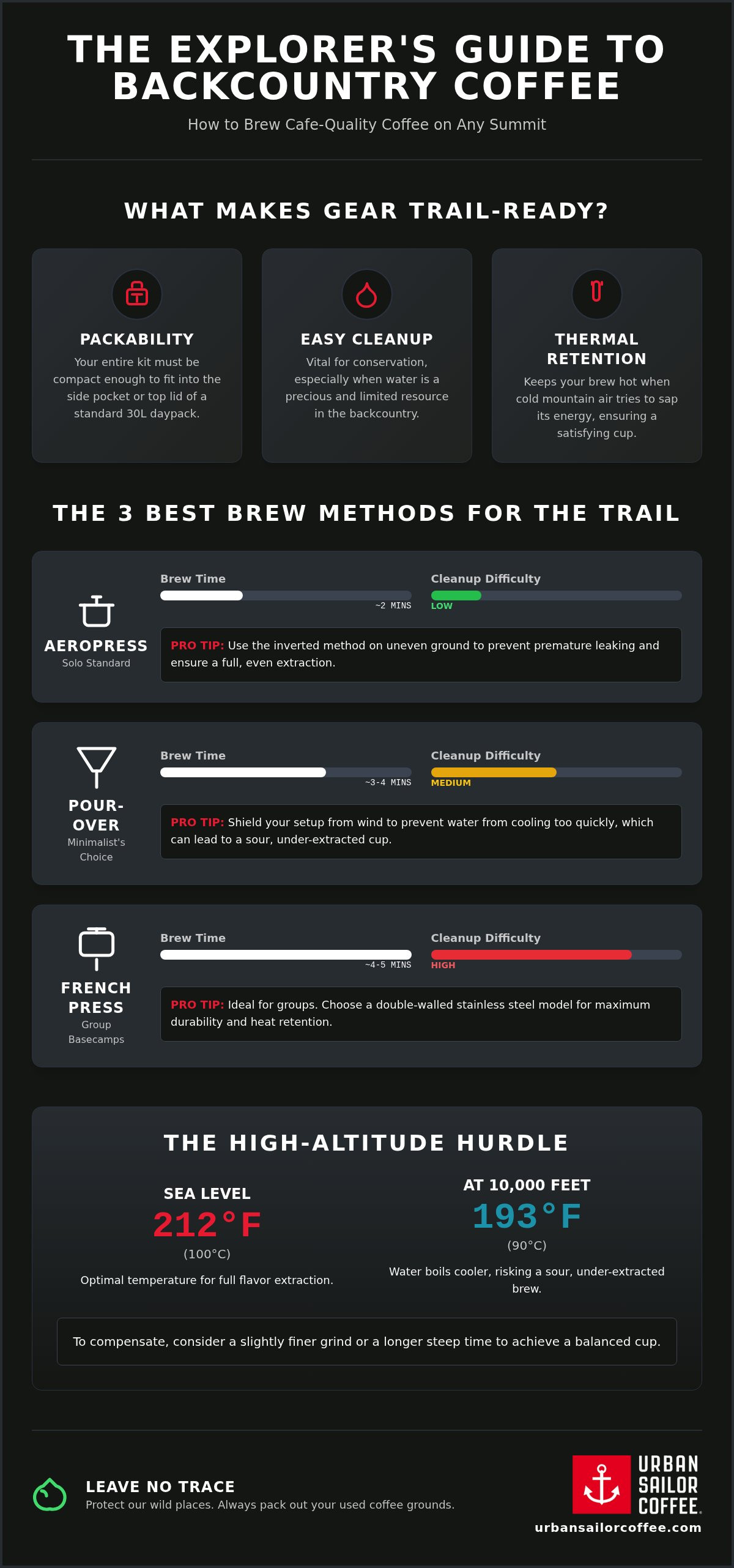
Three pillars define trail-ready equipment. First, packability ensures your kit doesn't dominate your bag. Second, ease of cleaning is vital because water is a precious resource in the backcountry. Third, thermal retention keeps your brew hot when the cold mountain air tries to sap its energy. These factors are critical for different coffee brewing methods used on the move. You need gear that works as hard as you do on the ascent.
Salt Lake City terrain is notoriously unforgiving. You might start a hike in 40-degree pre-dawn shadows and end it in 80-degree sun. Your gear must handle these rapid temperature swings while remaining fully functional. Gear that cracks in the cold or warps in the heat has no place in a Utah explorer's pack.
Weight vs. Flavor: Finding the Sweet Spot
Ultralight hikers often sacrifice flavor to save a few ounces on their base weight. Titanium gear is incredibly light, but it can sometimes impart a subtle metallic taste to delicate roasts. Ceramic components offer a flavor-neutral experience but add significant weight and fragility to your pack. Packability means your entire coffee kit fits into the side pocket or top lid of a standard 30L daypack. Finding the sweet spot involves choosing materials that protect the profile of the best coffee beans for camping without becoming a burden on your spine.
Durability Requirements for the Utah Backcountry
The red rocks of Moab and the jagged peaks of the Wasatch don't play nice with delicate equipment. Glass carafes are a liability in the backcountry. One slip on a granite slab and your morning is ruined. Modern gear relies on BPA-free, impact-resistant polymers that can survive a tumble down a scree slope. These materials are lightweight, nearly indestructible, and designed to withstand the grit and grime of the Utah desert. They provide the peace of mind you need when you're miles from the nearest replacement.
The 3 Best Brew Methods for the Trail in 2026
Choosing the right brewing method depends on your specific adventure. Whether you're fast-packing through the Wasatch or setting up a basecamp near Park City, your gear needs to match your pace. For those seeking the Best Coffee Beans in Salt Lake City, having a reliable extraction method is the second half of the equation. In 2026, three methods stand out for their balance of portability and flavor.
| Method | Brew Time | Cleanup Difficulty |
|---|---|---|
| AeroPress | 2 Minutes | Low (Self-cleaning) |
| Pour-over | 3 to 4 Minutes | Medium (Wet filter) |
| French Press | 4 to 5 Minutes | High (Rinsing required) |
Immersion brewing is often more forgiving in a camp setting. It allows for a fuller extraction even if your water temperature isn't perfect or your grind size is slightly off. This consistency is vital when you're using the best coffee beans for camping and want to taste every nuanced note. It's about getting a reliable cup every time, regardless of the weather.
The AeroPress: The Gold Standard for Solo Explorers
The AeroPress Go is the favorite for Salt Lake City hikers because it nests into its own drinking cup. Use the inverted method by flipping the device upside down during steeping to prevent premature leaking on uneven ground. This technique keeps the water and grounds together until you're ready to plunge. The rapid air pressure used during the plunge extracts more flavor in less time than traditional steeping methods.
Ultralight Pour-over: For the Minimalist Hiker
Minimalists love collapsible silicone drippers or titanium mesh filters for their nearly zero-weight footprint. However, wind-chill can quickly cool your water as it drips into your mug, leading to a sour cup. Shield your brew with your pack or a wind guard to keep the heat in. Without a gooseneck kettle, focus on a slow, circular pour to ensure all grounds are evenly saturated. It takes practice, but the clean flavor profile is worth the effort.
The Camping French Press: Best for Group Basecamps
When you're with a crew in Park City, a double-walled stainless steel press is king. It survives the cold and keeps enough coffee hot for the whole group. To avoid the sludge at the bottom, use a coarse grind and let the press sit for a minute after plunging. It's the ultimate setup for van-lifers who have the space for a bit more bulk. Before you head out, make sure your kit is stocked with a fresh bag of our Jordbaer Blend for the best results.
High-Altitude Brewing: The Utah Explorer’s Secret Weapon
Precision matters most when the air gets thin. In Salt Lake City, water boils at roughly 202°F. Head up to 10,000 feet in the High Uintas, and that boiling point drops to about 195°F. Most specialty coffee recipes assume you are brewing at sea level with water between 200°F and 205°F. When you can't reach those temperatures, your extraction slows down. This often results in a sour, thin cup that fails to do justice to the best coffee beans for camping.
Don't settle for under-extracted coffee. You can compensate for lower boiling points by adjusting two key variables: grind size and contact time. Grind your beans slightly finer than you would at home. This increases the surface area, allowing the cooler water to extract flavor more efficiently. Extend your steep or pour time by 30 to 45 seconds. These small tweaks bridge the gap created by the altitude and ensure a balanced, sweet cup every time you brew on a ridge.
Bean selection becomes even more critical when your brewing environment is variable. You need a roast that is forgiving and structurally sound. Selecting the best coffee beans for camping means finding roasts that maintain their integrity even when your kettle isn't hitting a rolling boil. It's about choosing quality that stands up to the elements.
Why Light Roasts Shine in the Mountains
Light-roasted beans are denser and more complex than their darker counterparts. They respond exceptionally well to high-altitude brewing because their bright acidity and floral notes remain distinct even at lower temperatures. The Jordbaer Blend is a perfect example. Its resilient profile handles temperature swings with ease, preserving its signature berry-forward sweetness. To ensure you always have a fresh supply for your weekend escapes, explore Coffee Bean Subscriptions in SLC.
Pre-Heating Your Gear in Cold Climates
Thermal shock is the silent killer of mountain coffee. If you pour 195°F water into a freezing metal dripper or mug, the temperature of your brew water can drop instantly by 10 or 15 degrees. Your extraction will stall before it even begins. Adopt a simple 30-second pre-heat routine. Pour a splash of hot water into your gear and swirl it around to warm the material. Using a durable vessel like the Urban Sailor Camping Enamel Mug helps retain that hard-earned heat while you enjoy the view.
Maintenance and Leave No Trace Coffee Habits
Respecting the trail is as vital as the brew itself. While coffee grounds look like dirt, they aren't a natural part of the Utah ecosystem. Scattering them near a campsite disrupts soil chemistry and can attract wildlife to high-traffic areas. In the sensitive environments of the Wasatch, Leave No Trace principles ensure these wild spaces remain pristine for the next explorer. Use a reusable silicone bag to pack out every gram of used grounds. These bags are leak-proof and prevent your sleeping bag or clothes from smelling like a wet filter.
Cleaning your gear in the field demands a soap-free approach. Even biodegradable soaps can wreak havoc on local water sources and alpine lakes. Stick to a simple 3-step routine to keep your kit fresh. First, eject the coffee "puck" from your AeroPress or remove the filter from your dripper directly into your waste bag. Second, wipe the interior of the device with a dedicated cloth or paper towel to remove oils. Third, rinse the gear with a small amount of hot water at least 200 feet from any stream or lake. This keeps your equipment functional without damaging the environment.
The Grinding Dilemma: Home vs. Trail
Manual hand-grinders offer the ultimate fresh taste, but they add significant bulk and weight to your setup. For most weekend escapes, grinding your beans at Urban Sailor 24 hours before you leave is a smarter move. It saves pack space and ensures a professional-grade grind consistency that hand-grinders often struggle to match. Store your pre-ground stash in an airtight container to lock in the volatile aromatics. When you're using the best coffee beans for camping, protecting that freshness is the difference between a flat cup and a vibrant one.
Organizing Your Coffee Kit
Keep your gear in a dedicated dry bag to stay organized. This prevents a stray bean from ending up in your clean socks and keeps everything in one place for a quick morning start. While it might seem like a luxury, a small digital scale is worth the weight for the consistency it provides. It ensures you aren't wasting water or your premium beans. Manage your fuel consumption by boiling only the exact amount of water you need. This preserves your stove's life and gets you back on the trail faster. Before you head out, stock up on adventure-ready supplies at Urban Sailor Coffee.
Urban Sailor: Adventure-Proof Beans and Lifestyle Gear
Our story didn't start in a corporate office. It began on the move, born from the spirit of a nomadic mobile coffee bar that understood the need for high-quality fuel in ever-changing environments. This heritage of mobility informs every decision we make, from the way we roast to the gear we curate. We know that when you're packing for a trip into the backcountry, every ounce matters and every flavor counts. We've transitioned from those grassroots beginnings to become an established expert for the Utah community, but we've never lost that original drive to explore.
Finding the best coffee beans for camping means looking for a roast that survives the transition from the roastery to the ridge without losing its soul. We focus on meticulous, small-batch production to ensure that the beans you carry are at their peak of freshness. This artisanal integrity is what sets a great morning apart from a mediocre one. Before you head out for your next weekend mission, stop by our Salt Lake City roastery for a pre-trip gear check. We love sharing stories of recent discoveries and helping you dial in your kit for the specific conditions you'll face.
Your vessel matters as much as the brew. The Urban Sailor Camping Enamel Mug is built for the rugged reality of Utah adventures. It's durable enough to survive a drop on the red rocks and classic enough to feel like a piece of heritage gear. It's the perfect companion for a slow morning at a desert basecamp or a quick caffeine fix before a summit push.
The Jordbaer Blend: Roasted for the Journey
The Jordbaer Blend is our quintessential summit coffee. It features a refreshing profile of strawberry and creamy notes that feel bright and energizing in the open air. Because we roast in small batches, the volatile aromatics are locked in, providing a vibrant experience even when your brewing conditions are less than ideal. This blend is resilient, delicious, and specifically crafted to be the best coffee beans for camping for those who value craft. Pack a bag of Jordbaer for your next Park City hike and experience how a berry-forward profile complements a crisp mountain morning.
Never Run Out: The Explorer’s Coffee Subscription
A great adventure shouldn't be stalled by an empty coffee canister. Our recurring subscription model ensures you always have a fresh supply of beans arriving at your door before the weekend hits. You can customize your roast levels and frequency to match your specific outdoor brewing method, whether you're an AeroPress devotee or a French press traditionalist. It's a seamless way to stay connected to the craft while maintaining your independence on the trail. Start your Urban Sailor adventure with a bean subscription today.
Elevate Your Backcountry Ritual
Mastering the art of outdoor brewing means more than just packing a stove. It requires a balance of high-performance gear, altitude-adjusted techniques, and a deep respect for the wild places we explore. By refining your grind for thin mountain air and committing to Leave No Trace habits, you'll ensure every morning on the trail is as impactful as the view. Whether you're solo-hiking the Wasatch or setting up a group basecamp in Park City, your routine shouldn't be an afterthought.
The final piece of the puzzle is selecting the best coffee beans for camping that can handle variable temperatures without losing their vibrant flavor. As a Utah-based specialty roaster, Urban Sailor offers small-batch freshness guaranteed to stand up to the elements. Our roasts are crafted by explorers, for explorers, ensuring your craft experience doesn't end where the pavement does. Gear up for your next adventure with Urban Sailor’s Jordbaer Blend and bring the quality of a Salt Lake City coffee bar to your favorite ridge. The trail is calling, and your perfect cup is waiting.
Frequently Asked Questions
What is the lightest coffee maker for backpacking in 2026?
Collapsible silicone or titanium mesh pour-over drippers are the lightest options for 2026 backpackers. These often weigh less than 15 grams and take up almost zero space in your pack. While they require a steady hand and a filter, their weight-to-performance ratio is unbeatable for solo missions. Pair them with a lightweight mug to keep your base weight low while still enjoying a fresh, specialty-grade brew on any summit.
Is it okay to dump coffee grounds in the woods?
No, you should never dump coffee grounds in the woods. While they are organic matter, they are not native to Utah's ecosystems and take a long time to decompose in arid climates. They can also attract wildlife and disrupt soil chemistry. Always follow Leave No Trace principles by packing out used grounds in a sealed bag. This keeps our trails pristine and ensures local wildlife stays wild.
How do I make coffee at high altitudes in Utah?
To make great coffee at high altitudes in Utah, you must adjust for lower boiling points. Since water boils at roughly 195°F at 10,000 feet, your extraction will be slower. Grind your beans slightly finer than usual to increase surface area and extend your total brew time by about 45 seconds. These small adjustments prevent the sourness often associated with under-extraction in the mountains, resulting in a balanced and sweet cup.
Can I use a regular French Press for camping?
You can use a regular French Press, but it's not recommended for rugged trips. Standard glass presses are highly fragile and will likely shatter in a pack or on a rocky surface. For camping, switch to a double-walled stainless steel model. It's nearly indestructible and offers much better thermal retention; this is essential when brewing in the cold morning air of the Wasatch or Uinta ranges.
What is the best coffee bean roast for outdoor brewing?
Light to medium roasts are the best coffee beans for camping because they offer a balanced acidity that shines even at lower brewing temperatures. Our Jordbaer Blend is specifically roasted to maintain its creamy, strawberry-forward profile in variable outdoor conditions. Darker roasts can often taste overly bitter or burnt when brewed with camp water, whereas a well-crafted light roast provides a refreshing and complex flavor that fuels your morning ascent.
How do I keep my coffee hot while winter hiking in Park City?
Keeping coffee hot during a Park City winter hike requires thermal management. Use a double-walled vacuum-insulated mug and always pre-heat it with a splash of boiling water before brewing. This prevents the cold material from instantly sucking the heat out of your coffee. If you're using our Camping Enamel Mug, keep it inside a jacket pocket or a dedicated insulated sleeve between sips to protect your brew from the biting mountain wind.
Should I grind my coffee beans before my camping trip?
Yes, grinding your beans about 24 hours before your trip is the most efficient choice for most campers. It eliminates the need to carry a heavy manual grinder and saves you time during a pre-dawn start. While whole beans stay fresh longer, the difference in flavor over a 48-hour window is negligible if you use an airtight container. This allows you to bring the best coffee beans for camping without the extra pack bulk.
What is the easiest coffee gear to clean on the trail?
The AeroPress is widely considered the easiest coffee gear to clean on the trail. Its plunger design acts like a squeegee, wiping the chamber clean as you press the coffee out. Once you're done, you simply pop the dry coffee puck into your waste bag and give the rubber seal a quick wipe. This minimizes water waste and keeps your kit tidy without needing soap or extensive scrubbing at your campsite.