


Why does that expensive bag of specialty beans sometimes taste like battery acid or a charred campfire once you get it home? It's a common frustration for explorers who just want a reliable cup to kickstart their day. You've likely spent too much on a coffee bean that promised "citrus notes" but delivered sour disappointment, or settled for stale grocery store bags that lost their soul months ago. It's confusing when roast levels and origins feel like a secret code you haven't cracked yet.
You deserve a brew that matches the grit and beauty of the Utah trails. We're here to bridge that gap. You'll discover how to identify, select, and brew the perfect coffee bean to fuel your next adventure. We'll dive into the 2026 SCA standards for precision, explain why the "Freshness Gap" matters for your flavor profile, and show you how supporting local SLC roasters leads to a better morning. It's time to stop guessing and start brewing with confidence. Let's get moving.
Key Takeaways
- Decode the difference between Arabica and Robusta so you never waste money on a flavor profile that doesn't fit your palate.
- Master the art of selecting a coffee bean by identifying how roast levels either highlight natural fruitiness or lean into bold, chocolatey notes.
- Pinpoint the "Peak Flavor Window" to avoid stale grocery store bags and ensure your brew is at its absolute best.
- Discover how Salt Lake City’s high altitude creates unique roasting conditions and how to match your beans to your favorite brewing method.
What is a Coffee Bean? Understanding the Anatomy of Flavor
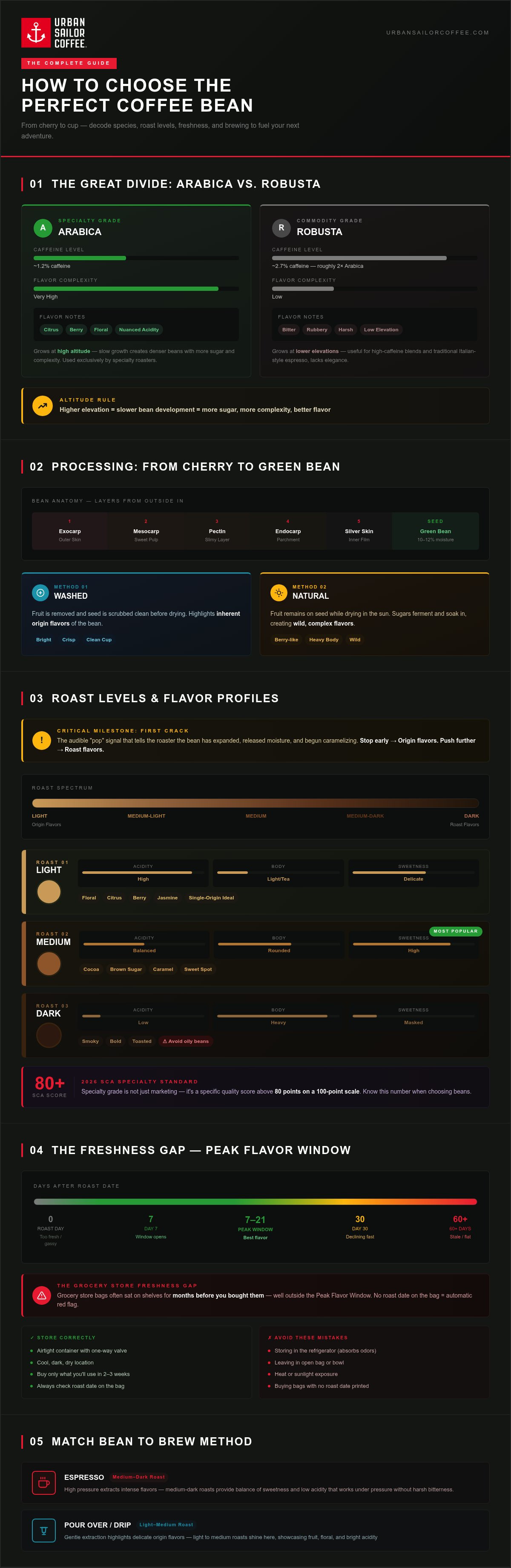
To understand your morning brew, you have to look past the bag and the grinder. Every What is a Coffee Bean? inquiry leads to a surprising biological fact: it is the seed of a cherry-like fruit. These cherries grow on shrubs in the "Bean Belt," and the seed inside is a complex record of soil, rain, and sun. The anatomy of a coffee bean is like a protective vault. It starts with the exocarp (outer skin), followed by the mesocarp (sweet pulp), a slimy pectin layer, the endocarp (parchment), and finally the silver skin. Each layer must be stripped away to reveal the green seed we eventually roast. In our world, quality isn't just a marketing term; the specialty designation is a specific quality score above 80 points on a 100-point scale.
Arabica vs. Robusta: The Great Divide
Most coffee drinkers encounter two main species. Arabica is the darling of the craft world. It thrives at high altitudes where the air is thin and the growth is slow. This environmental stress creates a denser seed, which translates to nuanced acidity and complex sweetness. Specialty roasters almost exclusively use Arabica because it offers the clarity and fruit notes that make a cup memorable. Robusta is the rugged workhorse. It grows at lower elevations and produces roughly double the caffeine of its refined cousin. While it's useful for high-caffeine blends and traditional Italian-style espresso, it often carries a bitter, rubbery profile that lacks the elegance found in high-altitude crops. Altitude is the compass here. Higher elevations generally produce the most sophisticated flavors because the beans develop more slowly, packing in more sugar and density.
The Journey from Cherry to Green Bean
How that seed gets out of the fruit changes everything. Washed processing involves removing the fruit and scrubbing the seed clean before drying. This method highlights the inherent origin flavors of the coffee bean, resulting in a bright and crisp cup. Natural processing leaves the fruit on the seed while it dries in the sun. This allows the sugars to ferment and soak into the bean, creating wild, berry-like flavors and a heavy body. Once the processing is complete, we are left with the green coffee bean. This is a shelf-stable vessel for potential flavor, typically exported with a moisture content between 10% and 12% to prevent mold during its long journey across the ocean. It is the raw material for our craft, waiting for the heat of the roaster to unlock its hidden stories and fuel your next adventure.
Roast Levels and Flavor Profiles: Finding Your Compass
Roasting is the moment the story within each coffee bean finally speaks. It is a process of unfolding inherent sugars through heat and motion. While the Anatomy of a Coffee Bean dictates what flavors are biologically possible, the roast determines which ones take center stage. We listen for the "First Crack" during production. This is a literal popping sound, similar to popcorn, that signals the bean has expanded enough to release moisture and begin caramelizing. It is the critical milestone for specialty roasting. If we stop shortly after this point, we preserve "origin flavors" like fruit and florals. If we push further, we develop "roast flavors" such as chocolate, toasted nuts, and smoky char.
Finding your preference is like choosing a trail. Some explorers want the bright, sharp clarity of a high-altitude peak, while others prefer the deep, comforting shadows of a forest floor. Our Jordbaer Blend serves as a perfect example of this balance. It is crafted to highlight a specialty profile that remains accessible, providing enough sweetness to ground the cup without masking the vibrant characteristics of its origin.
Light Roasts: Preserving the Origin
Light roasts are for the purists. They retain high acidity and a delicate, tea-like body that allows the unique characteristics of the farm to shine through. You will find distinct floral notes and bright hits of citrus, berry, or jasmine. These are the top choice for single-origin enthusiasts who want to taste the specific soil and altitude where the crop was raised. Because the beans spend less time in the roaster, their complex organic acids remain intact, offering a crisp experience that is often compared to fine wine or craft cider.
Medium and Dark Roasts: Developing the Sweetness
Medium roasts represent the sweet spot of balance and caramelization. This level offers a rounded mouthfeel with notes of cocoa and brown sugar. It is the most popular choice for those who want a "coffee that tastes like coffee" but with elevated quality. Dark roasts move into bold, smoky territory with a heavy-bodied profile. Be wary of beans that look excessively oily. While a slight sheen is natural for darker roasts, heavy oil is often a sign of age or over-roasting. This can lead to a "burnt" or "ashy" taste that covers up the coffee bean's natural potential. If you are looking to explore these different profiles from your own kitchen, our specialty coffee collection provides the perfect starting point for your next taste adventure.
Freshness and Storage: Keeping the Spirit Alive
Freshness isn't a suggestion; it's the difference between a flat, bitter cup and a vibrant adventure. Once a coffee bean leaves the roaster, it begins a process called degassing. During roasting, carbon dioxide builds up inside the bean's structure. If you brew it too soon, that trapped gas interferes with water extraction, often leading to a metallic or "fizzy" taste. You need to let it rest. The "Peak Flavor Window" for specialty coffee is generally between 7 and 21 days after the roast date. This is when the chemical compounds have stabilized and the intended flavor profile is most articulate.
To protect this window, you must guard against the four enemies of the coffee bean: light, heat, air, and moisture. Each of these factors accelerates oxidation and breaks down the delicate oils that carry flavor. Pre-ground coffee loses its aromatic complexity within minutes of exposure to air. If you want to keep the spirit of your coffee alive, your storage method needs to be as rugged and reliable as your outdoor gear.
The Freezer Myth vs. Reality
Many people think the freezer is a safe harbor, but it's usually a trap. Every time you pull a bag out of the cold, moisture from the air condenses on the cold beans. This moisture damages the cell structure and creates a "freezer burn" taste. Additionally, coffee is porous and will absorb odors from whatever else is in your freezer. If you must freeze for long-term storage, use an airtight, vacuum-sealed container and only thaw it once. Look for bags with one-way valves. These allow CO2 to escape without letting oxygen in, which is crucial for maintaining integrity during the degassing phase.
Whole Bean vs. Pre-Ground
The math of freshness comes down to surface area. When you grind a bean, you increase the surface area exposed to oxygen by thousands of percent. This leads to rapid oxidation. Investing in a burr grinder is the #1 upgrade for any home explorer. Unlike blade grinders that hack beans into uneven chunks, burr grinders crush them into uniform particles for even extraction. You can smell the difference immediately. Fresh coffee smells like a new discovery; oxidized coffee smells like dusty cardboard. Switching to whole beans ensures your morning fuel is ready for the trail.
Matching the Bean to the Brew: A Practical Framework
Choosing a coffee bean is only half the battle; the second half is matching that bean to your equipment. Think of your brewing method as the terrain and your bean as the vehicle. A delicate, floral Arabica might get lost in a heavy-duty French Press, while a bold, dark roast can overwhelm a refined pour-over. A solid starting framework is to pair high-acidity beans with paper filter methods and high-body beans with immersion methods. If you are sipping from a Camping Enamel Mug by the fire, you need a bean that retains its character as it slowly cools in the open air.
Grind size is your primary tool for navigation. If your cup tastes sour or salty, your grind is likely too coarse. If it's bitter and hollow, you've gone too fine. Remember that "espresso beans" aren't a different species of plant. They are simply a coffee bean blend or roast profile specifically chosen to handle the intense pressure and short extraction time of an espresso machine. Any bean can be brewed any way, but some are simply better suited for certain paths.
The Pour-Over and Drip Enthusiast
Light to medium-light roasts are the gold standard for paper filters. These methods excel at clarifying flavor, making them perfect for highlighting the complex acids we discussed in section one. Look for "high elevation" on the label. Beans grown at higher altitudes are denser and produce a cleaner, more vibrant cup in a pour-over. For the most consistent results, follow the 1:16 water-to-coffee ratio. This means using 16 grams of water for every 1 gram of coffee, providing enough solvent to pull out the sweetness without over-extracting the bitter compounds.
French Press and Cold Brew
Immersion methods like the French Press or Cold Brew demand a coffee bean with a sturdy, chocolatey base. Medium-dark roasts shine here because the long contact time between water and coffee extracts the deeper, more caramelized sugars. Use a coarse grind to ensure the water can circulate freely without getting trapped in a muddy bed of silt. Our Jordbaer Blend is a fantastic, versatile choice for these methods. It provides a crowd-pleasing richness that stands up well to milk or cream while maintaining enough specialty character to be enjoyed black. Ready to find your perfect match? Explore our specialty coffee collection and gear up for your next morning ritual.
Why Local SLC Roasting Wins: The Urban Sailor Advantage
Altitude isn't just a metric for your weekend hike; it's a critical factor in the roasting drum. In Salt Lake City, we roast at over 4,200 feet. Thin air means lower boiling points and different heat transfer rates during the roasting process. This environmental quirk allows us to develop the coffee bean in ways that sea-level roasters simply can't match. It's a rugged, high-altitude craft that results in a cleaner, more vibrant profile. By choosing local, you aren't just buying a bag of beans. You're supporting a Salt Lake City and Park City community that values independence and artisanal integrity.
Our story began with a mobile sidecar and a desire to bring world-class coffee to the people wherever they gathered. We've grown from those nomadic roots into an established expert roasting right here in the heart of the Wasatch Front. This transition from a mobile service to a community-rooted presence allows Urban Sailor Coffee® to maintain a personal connection with every explorer we serve. We still roast in small batches, ensuring that every bag of Jordbaer Blend or single-origin offering meets our meticulous standards before it reaches your kitchen counter. It's about the journey and the stories behind every cup.
The Freshness Advantage in the Wasatch Front
National brands often leave their products sitting in distribution centers for weeks or months. By the time those beans hit a grocery store shelf in Utah, they've already drifted far past the peak flavor window we discussed earlier. Local roasting eliminates the long-haul shipping delay. Your coffee bean order arrives at its flavor peak, not after a cross-country trek in a hot trailer. Shorter supply chains also mean a reduced environmental impact and greater transparency for the consumer. You can connect with Urban Sailor Coffee® and understand the journey from the farm to the bag. It's a collaborative effort that ensures quality at every step.
Never Run Out: The Coffee Bean Subscription
The worst way to start an adventure is realizing your bag is empty or, worse, full of stale grocery store dust. Our subscription model is designed for the active explorer who values both efficiency and excellence. It solves the stale bean problem by delivering fresh roasts exactly when you need them. You can tailor your delivery frequency to match your adventure schedule, whether you're prepping for a month of desert camping or just need a reliable morning ritual. Stop settling for old coffee that has lost its soul. Fuel your next journey with an Urban Sailor Coffee® Subscription and experience the difference of local, high-altitude craft.
Gear Up for Your Best Brew Yet
You've mapped out the journey from high-altitude farms to the precision of our Salt Lake City roastery. You now have the compass needed to navigate roast levels and the knowledge to protect your beans from their greatest enemies. Selecting the right coffee bean is no longer a guessing game; it's a deliberate choice to fuel your lifestyle with quality and craft.
We use these exact beans daily in our professional mobile coffee catering to ensure every guest gets a world-class experience. Whether you're brewing at home or packing for the trail, you can trust our small-batch process and high-altitude expertise. We even offer free local pickup options in SLC and Park City to keep your supply fresh and your momentum high. Stop settling for stale, mass-produced bags that lost their soul on a warehouse shelf months ago.
Grab a bag of Jordbaer Blend and start your journey today. The trail is waiting, and your perfect cup is ready to follow. Let's get moving.
Frequently Asked Questions
How can I tell if my coffee beans are fresh?
Check the roast date on the bag to ensure you are within the 7 to 21 day peak flavor window. You can also perform a "bloom test" by pouring a small amount of hot water over the grounds; fresh coffee will bubble and expand as it releases trapped carbon dioxide. If the grounds remain flat and lifeless, the coffee bean has likely lost its aromatic oils and gone stale.
Is there a difference between espresso beans and regular coffee beans?
No biological difference exists between the two; they are the same seeds from the same plants. The "espresso" label is simply a recommendation from the roaster. It suggests a specific roast profile or blend of beans that will taste balanced and sweet when extracted under the high pressure of an espresso machine. You can use any high-quality coffee bean for espresso as long as you have a capable burr grinder.
Why does my coffee taste bitter even though I bought expensive beans?
Bitterness is usually a sign of over-extraction caused by water that is too hot or a grind that is too fine. Even the most expensive specialty beans will taste harsh if they are brewed for too long or with boiling water. Try coarsening your grind size or letting your kettle sit for a minute after boiling to hit the ideal 200 degree Fahrenheit range. This adjustment often reveals the hidden sweetness you paid for.
Should I store my coffee beans in the refrigerator?
Never store your beans in the refrigerator because the moisture and fluctuating temperatures will ruin the flavor. Coffee is porous and acts like a sponge, absorbing the odors of whatever else is in your fridge. You don't want your morning brew to taste like yesterday's leftovers. Keep your beans in a cool, dark cupboard inside an airtight container or their original bag with a one-way valve.
What are the best coffee beans for a French Press?
Medium to dark roasts with a heavy body and low acidity are the best choices for a French Press. Because this is an immersion method, you want a bean that provides a sturdy, chocolatey base that won't turn sour during the four minute brew time. Our Jordbaer Blend is a versatile, crowd-pleasing option that provides the richness people love in a press while maintaining its specialty integrity.
How long do coffee beans stay fresh after the bag is opened?
Oxygen begins degrading the delicate oils immediately, so you generally have about 7 to 14 days of peak flavor once the seal is broken. Keep the bag tightly rolled down or move the beans to a vacuum canister to slow down the oxidation process. If the aroma starts to smell like dusty cardboard rather than vibrant fruit or chocolate, it's a sign the beans have passed their prime.
What does 'Single Origin' actually mean on a coffee label?
Single origin means the coffee was harvested from one specific geographical location, such as a single farm or a small cooperative in one region. This allows you to taste the unique "terroir" or environmental characteristics of that specific soil and altitude. It is the opposite of a blend, which combines beans from multiple countries to create a consistent, year-round flavor profile.
Can I use light roast beans for espresso?
Yes, you can use light roasts for espresso, but it requires a very precise grinder and a bit of patience to dial in. Light roasts are denser and harder to extract, which can lead to an unpleasantly sour shot if your machine isn't set up correctly. When done right, they offer a bright, modern espresso experience with intense hits of citrus and berry that stand out from traditional dark roasts.